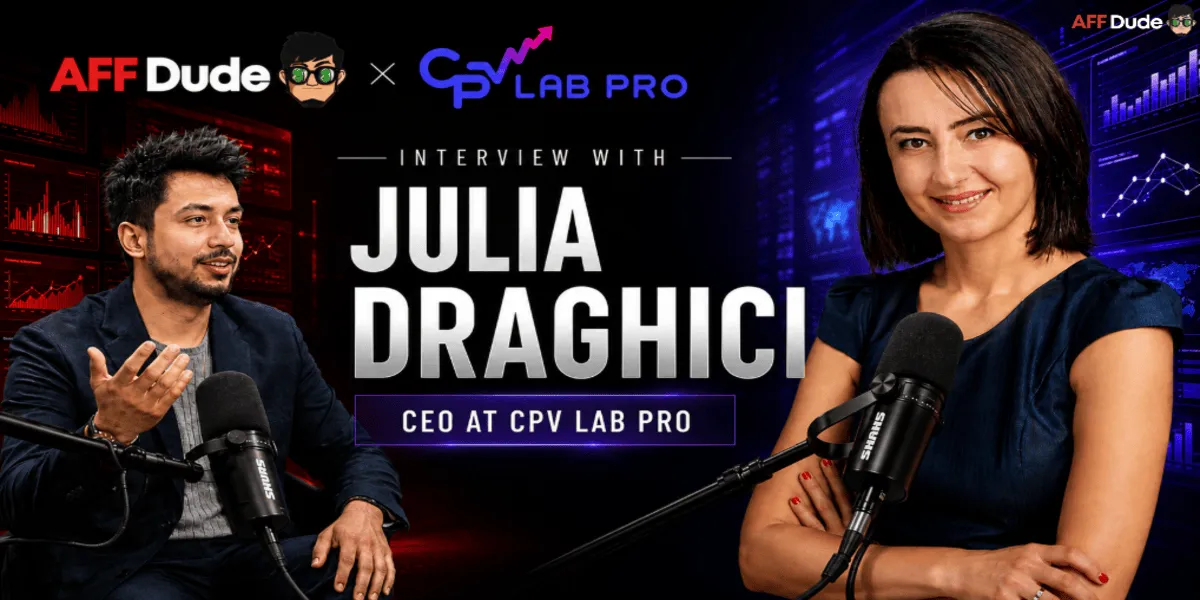
Julia Draghici Interview: CPV Lab Pro CEO on Why Self-Hosted Still Wins

By :
Ali
August 11, 2026
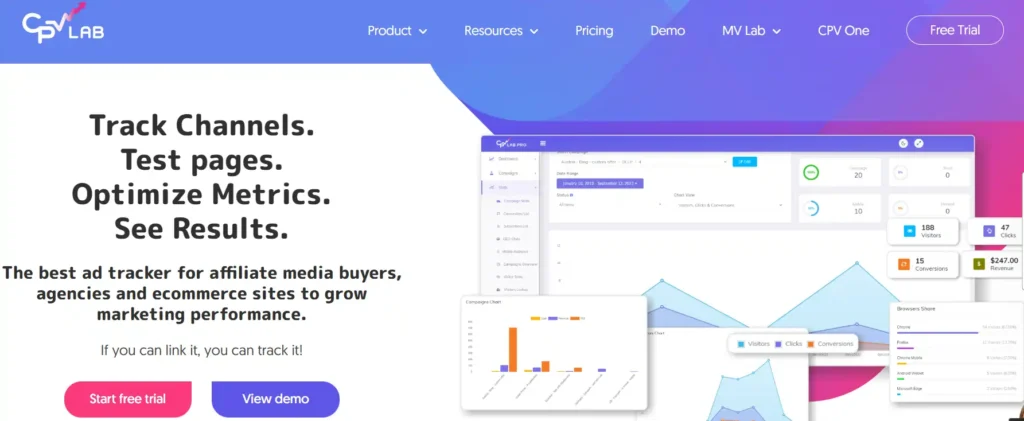
CPV Lab is a performance marketing tracker built for the people actually buying the traffic. Affiliates and media buyers use it to track clicks, attribute conversions, and optimize campaigns across multiple ad platforms from one place, either self-hosted on their own server or in the cloud with CPV One.
What sets it apart is the ownership angle. Your tracking data sits on your infrastructure, your costs stay predictable no matter how many clicks you push, and your winning campaigns stay yours. In a market where nearly every tracker went cloud only, CPV Lab kept the self-hosted model as its flagship.

Julia Draghici CEO of CPV Lab Pro
Julia came into affiliate marketing from the other side of the table.
Computer science and economics, then years building platforms for a US marketing company, then managing dev teams of 10 to 15 people.
She co-founded the business with her husband Radu after deciding corporate life was done, and today she owns vision, strategy, marketing, partnerships, and team while Radu handles the technology.
In this exclusive interview, Julia shared her thoughts on…
Where attribution actually stands after cookie deprecation, iOS restrictions, and ad blockers, why server to server postbacks and first party parameters have replaced pixel tracking, and the one mistake quietly draining budgets across the industry. She also opened up about co-founding a company with her partner, moving from lifetime licences to subscriptions, and how far media buyers are really willing to let automation run.
1. Let’s begin with you. Computer science and economics, then developer, then management. How did that path end up at the head of a performance marketing tracker?
Well, I would say it was a mix of chance and timing – and looking back, every step prepared me for what came next.
After my first child, I decided I didn’t want to return to the corporate world. I wanted to build something of my own. At the same time, my husband Radu was struggling with a project after his business partner left. I told him I’d join – but only if we went all in, full time.
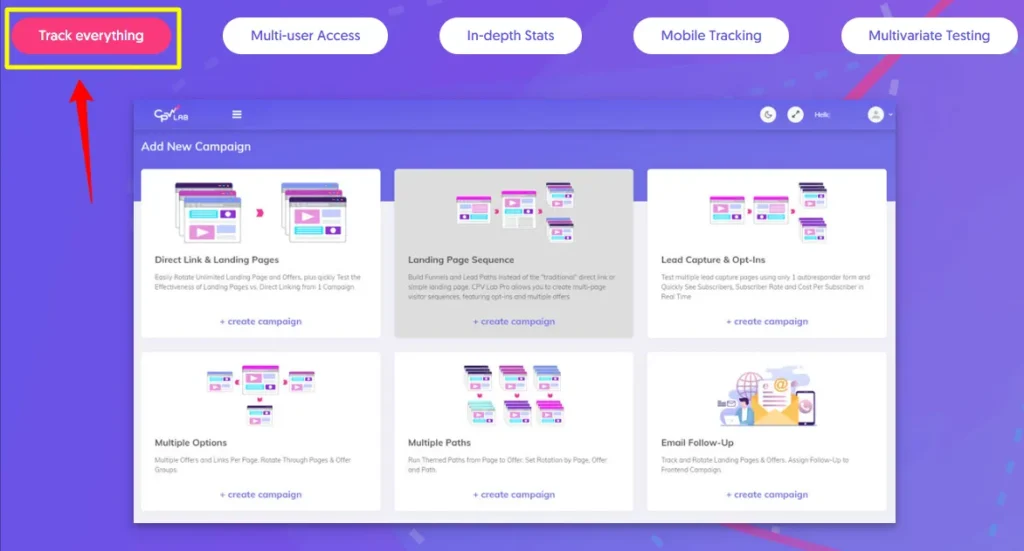
That project was CPV Lab. And that’s how this business really started.
I came in with almost no background in affiliate marketing. What I did bring was experience building software for a US marketing company, and years of working between development teams and business stakeholders. Learning to market and sell a product was a completely new challenge – but I had always been comfortable learning things the hard way.
2. Your first job had you building platforms for a US marketing company. Was that the moment marketing got its hooks into you, or did that come later?
That was definitely where it started. I was part of the development team and eventually moved into management, and what I remember most is how much I enjoyed working directly with marketers – understanding what they were trying to achieve and figuring out how to translate that into something we could actually build.
Marketers put an enormous amount of thought into every message, every test, every decision about what’s working and what’s not. I found that fascinating. And being a technical person by training, I naturally started seeing their processes as systems that could be optimized.
That mindset – listening to what people actually need and translating it into a solution – is still how I work today.
3. You and Radu built this together. What’s it actually like co-founding a company with someone that close, and how do you split the load?
Ha – it has its very good parts and its not-so-good parts.
The great thing is that we are never short of things to talk about. If it’s not the kids, it’s the product, the team, a new feature, a partnership. We never really switch off, which can be exhausting, but it also means we’re always aligned.
I’ve heard many people say they would never work with their partner. I get it. But for us it works, genuinely, because we complement each other well and we respect each other’s areas.
I handle vision, strategy, creative direction, marketing, and team management. I push ideas forward – sometimes a bit relentlessly. If someone tells me something can’t be done, I tend to get more ambitious about finding a way to do it.
Radu is the opposite in the best possible way. He’s a pure technical mind. Give him a problem and he’ll think through every scenario, sometimes overnight, and then sit down and build the solution. In my career I’ve managed development teams of 10 to 15 people, and I can say Radu is one of the sharpest technical minds I’ve worked with.
Between us: I take care of partnerships, online presence, marketing, and team. Radu owns the technology – infrastructure, integrations, ad network connections, and supporting the team when clients have complex technical issues.
4. Your title is CEO but you’re also hands-on with marketing, and users mention you answering their support emails yourself. Is that by design, or just what happens when you care about the thing you built?
A bit of both.
We’re a small, lean team and we intentionally keep the hierarchy flat. The big decisions sit with me and Radu, but beyond that, everyone wears multiple hats – including me.
On support: yes, I do jump in when needed. Sometimes it’s because someone on the team isn’t available. But a lot of the time it’s because I want to stay close to what our users are actually experiencing. You learn things from a support conversation that you simply don’t get from a dashboard. I want to hear them out directly.
On marketing: for a long time we didn’t have anyone dedicated to it, so I handled most of it myself. I still lead a lot of it today. And I think my direct relationship with customers gives me a different kind of insight – I know what language they use, what they worry about, what actually matters to them.
It also pushed me outside my comfort zone. I’m an introvert. Starting to do interviews and public conversations was genuinely hard. But I kept at it, and I can see the progress. That’s something I’m proud of.
5. Trackers are a tough sell. Nobody gets excited about buying one, but you can’t scale without one. How do you market something that’s essential but not exactly thrilling?
It’s a real challenge, and there’s no perfect formula.
First, it helps to understand that there are different types of trackers. Affiliate networks use trackers to manage their affiliates.
What we build at CPV Lab and CPV One is different – it’s a performance marketing tracker used by the affiliates and media buyers themselves to track and optimize their own campaigns.
The audience we’re selling to – affiliate marketers and ecommerce operators – is not easy to market to. They see through every promotional tactic. They know how funnels work. If your message isn’t genuinely useful and credible, they’ll ignore it instantly. So the bar is high, and it should be.
What works for us is being real. Content, community, word of mouth, real conversations about what the tool does and doesn’t do. These are performance marketers – they respond to data and results, not hype.
The bigger gap I see is the segment that still doesn’t track at all. In 2026, there are still media buyers managing campaigns in spreadsheets and manual formulas. In an era where AI tools can do extraordinary things with clean, structured data – that’s a real problem. The people who own their data are going to have a massive advantage. That’s a story we keep telling, because it’s true.
6. You run your own interview series, Champions of Performance Marketing. What made you want to sit on the other side of the mic, and what’s the best thing you’ve learned from doing it?
There were two reasons, and the first one was a little selfish. 🙂
I have something close to stage fright. Public speaking has never come naturally to me. I decided the best way to work on that was to just start doing it, so I launched the series as a kind of structured practice. A real reason to show up and have real conversations with real experts.
The second reason was about creating something genuinely useful for our community – content that goes deeper than tutorials or product updates. Every episode I want the guest to share something the listener can actually learn from and apply.
What I didn’t expect was how much I would get out of it personally. Some of the conversations have completely shifted how I think about certain parts of the business. And what started as me going out and finding guests has slowly become guests reaching out to us – which tells me something is working.
7. What’s the hardest call you’ve had to make as CEO that you’d happily never make again?
Letting go of a team member. Every time.
I invest a lot in finding the right people for our team. Because we’re small, fit matters just as much as skill – every person shapes the dynamic for everyone else. Because of that, I tend to give second chances, and sometimes third ones, longer than I probably should.
It has happened a few times where I stayed too long in a situation that wasn’t working – spending months on calls, training, feedback – and then eventually had to make the call anyway. It’s draining, and the cost isn’t just financial. It affects momentum, morale, and the rest of the team.
I like to think I’ve gotten better at recognizing the signs earlier. But I still find it the hardest part of the role. I get attached to every person we bring in, and that’s probably not going to change.
8. Almost every competitor went cloud-only. You kept self-hosted as the flagship and added CPV One alongside it. Why hold that line?
Letting go of a team member. Every time.
I invest a lot in finding the right people for our team. Because we’re small, fit matters just as much as skill – every person shapes the dynamic for everyone else. Because of that, I tend to give second chances, and sometimes third ones, longer than I probably should.
It has happened a few times where I stayed too long in a situation that wasn’t working – spending months on calls, training, feedback – and then eventually had to make the call anyway. It’s draining, and the cost isn’t just financial. It affects momentum, morale, and the rest of the team.
I like to think I’ve gotten better at recognizing the signs earlier. But I still find it the hardest part of the role. I get attached to every person we bring in, and that’s probably not going to change.
9. Sell us on owning your own data on your own server. What does that get a media buyer in practice that a hosted tracker can’t match?
There are three real advantages.
First: your data is completely yours. With CPV Lab, we have no visibility into what campaigns you’re running. The tracker lives on your server, under your control. We collect some high-level aggregated statistics – most popular traffic sources, that kind of thing – but we have no access to your actual campaign data. That’s by design.
Second: cost predictability. With a self-hosted tracker, you pay a one-time license and your own hosting costs. You can run millions of clicks per day and your tracker cost doesn’t change. For high-volume buyers, that’s a meaningful financial advantage over event-based cloud pricing.
Third: peace of mind around campaign security. Some affiliates are protective of their winning campaigns and don’t want any risk of exposure. A self-hosted solution eliminates that concern entirely.
I do want to say something openly here: with CPV One, our cloud tracker, we genuinely don’t sit around monitoring user campaigns. We look at server performance, application health, and we debug specific issues when users ask us to. We’ve never taken a client’s winning campaign and copied it. But I understand why some buyers prefer not to have that question at all – and for them, self-hosted is the right answer.
Ultimately, it’s about trust. And I think our industry needs more of it.
🔥 Claim 10% Off CPV Lab with Code BLOGE15
Take control of your campaign data with self-hosted affiliate tracking. Get 10% off CPV Lab and keep your tracking, data, and campaign intelligence under your control.
SAVE UP TO 10%
10. Lifetime licences and unlimited events go against every SaaS playbook out there. How does that model hold up, and would you do it the same way again?
I’d do it again – but with tighter boundaries than we had the first time.
Lifetime deals are genuinely useful at launch. They lower the barrier to entry, drive early adoption, and get real users into your product fast. For a bootstrapped business trying to build a user base without a marketing budget, that matters. I still believe in them.
The problem is sustainability. Your revenue chart starts to look like a wave – peaks when you promote, valleys in between – and you can’t build a growth strategy on that alone. Development costs money. Support costs money. Ongoing infrastructure costs money. At some point, MRR has to become the foundation.
We transitioned to subscriptions, and it was the right call for the long-term health of the business. We still offer lifetime licenses for CPV Lab, but they’re priced appropriately now – structured to cover at least a year of subscription value, with support and updates included for that period.
And the users we grandfathered from the early days? We still honor those agreements. That was the deal we made with them, and it was the right thing to do. It cost us more than we expected in support overhead over the years – but I’d make the same call again.
11. Cookies dying, iOS locking down, Safari’s ITP, ad blockers. Tracking has been under siege for years. Where does attribution actually stand right now, and what still genuinely works?
It has been a siege, and it’s not over. But the industry adapts, it always does.
The era of passive, pixel-based tracking is behind us. What works now is more intentional and more technical. Server-to-server postbacks. First-party data collected on your own domain. Direct API integrations with ad platforms that let you pass conversion signals back cleanly, without relying on a browser to do it for you.
The shift has actually raised the bar in a useful way. The media buyers who track properly – who send conversion data back to their traffic sources, who use first-party parameters, who own their data end to end – are getting better performance from their campaigns because the ad platform algorithms have real signals to learn from. The ones still relying on the old methods are increasingly flying blind.
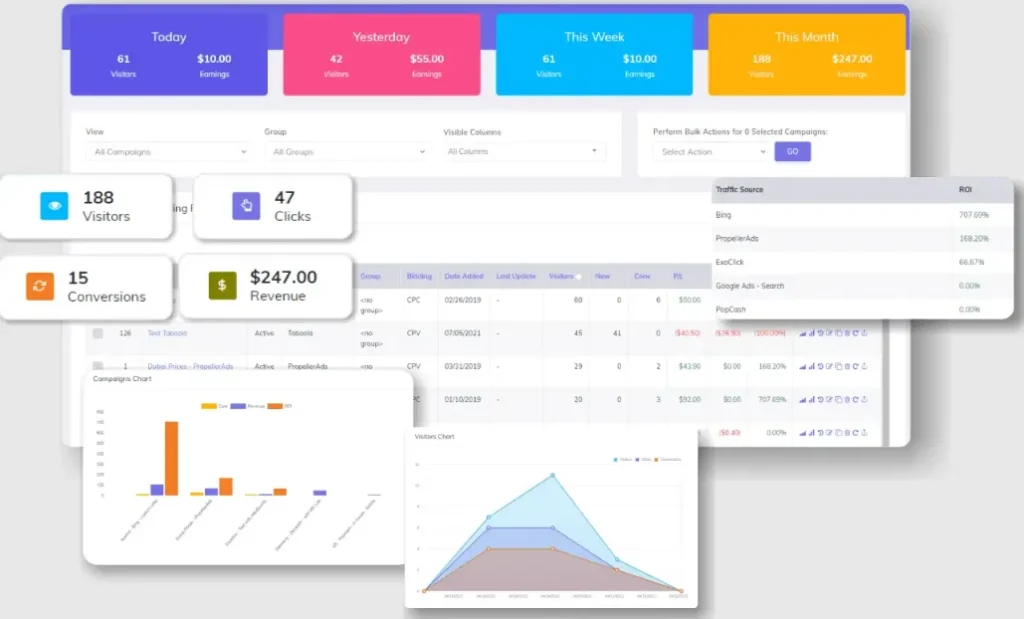
The bigger picture is data quality. With AI tools now doing analysis, prediction, and optimization across marketing operations, the value of clean, accurate, first-party data has never been higher. It’s not just about attribution anymore – your tracking data is what fuels every optimization decision, automated or otherwise. Good data in, good decisions out.
What we focus on at CPV Lab and CPV One is making that data easy to collect, easy to pipe back to traffic sources, and easy to act on. The tools exist. The buyers who use them well are the ones building sustainable campaigns.
12. You’ve got server-to-server postbacks and first-party parameters doing the heavy lifting now. For a buyer who’s never gone past a basic pixel, what are they missing?
They’re missing the feedback loop that makes campaigns actually improve over time.
A pixel fires in the browser. It depends on the browser allowing it, the user not having an ad blocker, iOS not stripping the parameters, even on the plugins installed in the browser – there are a dozen ways it can fail silently. And when it does fail, you don’t know. You just have less data than you think you do.
Server-to-server postbacks work differently. The conversion signal goes directly from your server to the traffic source’s server – no browser involved, no user privacy settings in the way, no ad blocker that can intercept it. It’s more reliable, and it’s more complete.
First-party parameters work the same principle from the collection side. Instead of relying on third-party cookies to track a user’s journey, you pass your own tracking parameters through your own domain. The data lands on your infrastructure, under your control.
What buyers who haven’t moved past pixels are missing is not just accuracy – it’s the ability to close the loop. When your ad platform doesn’t know which visitors converted, its algorithm can’t learn. It keeps showing your ads to the same broad audience instead of finding more people who look like your actual buyers. You’re paying for traffic and leaving the optimization on the table.
CPV Lab and CPV One both have these integrations built in – postbacks, API connections to major ad networks, and the ability to send conversion data back automatically. It’s not complicated to set up, and the performance difference is real.
13. Alert profiles and optimisation profiles are basically automation. Are people letting rules run their campaigns yet, or is everyone still watching dashboards by hand?
It’s a mix, and it’s shifting
There are experienced media buyers who have been running automation rules for years. For them it’s standard practice.
But a lot of buyers are still very attached to manual oversight. They like seeing the dashboards, running their own checks, making the calls themselves. Some of that is habit. Some of it is legitimate caution – automated rules can cause real damage if they’re set up wrong.
What I’m seeing more of now is a middle ground. Buyers want automation for the repetitive, mechanical parts – campaign creation steps, performance alerts, syncing data between tools – but they want to stay in control of the strategic decisions. Tools like Make.com are becoming popular for building custom workflows that connect the tracker to other parts of their stack. We’ve had more and more users asking about that kind of integration.
CPV Lab has automation capabilities built in for a while – alert profiles, optimization rules, conditional logic. The demand for that functionality is growing, and we’re continuing to build in that direction. The next phase is making it easier to plug those automations into broader AI-driven workflows, which is where we think the industry is heading.
14. What’s the most common tracking mistake you see, the one quietly costing people money without them realising?
Not sending conversion data back to the traffic source. It’s probably the most widespread and most expensive mistake I see.
Here’s what happens: you set up a campaign, traffic comes in, people convert, you’re happy. But if those conversion events never get sent back to the ad platform, the algorithm that’s serving your ads has no idea which visitors actually complete your goal. It keeps optimizing for clicks, or reach, or whatever surface-level signal it has access to – instead of learning what a real buyer looks like.
Over time, you’re paying for traffic and leaving the machine learning completely untrained on your actual results. Your CPA drifts up. Your best audiences get diluted. And because the campaign is still technically running and spending, you might not even notice it’s underperforming against what it could be doing.
Both CPV Lab and CPV One have postback and API integrations with all the major ad networks specifically to solve this. You can send conversion data back automatically, and you can even control what percentage of conversions or what percentage of the revenue you share – useful for buyers who want to give the algorithm signal without revealing everything. Small detail, real impact.
There’s a related tip that most people miss, especially on Meta,TikTok and Snapchat. When you send conversion events back to those platforms, you can also include customer data – email address, phone number, name – if you have them. These platforms use such extra data to better match the conversion to a real user profile, and the better the match, the smarter the algorithm gets about who to target next.
It’s called customer information matching, and a strong match score can meaningfully improve your campaign performance over time. Most buyers are sending the conversion event but leaving that extra data out. That’s a missed opportunity, and it costs nothing to fix.
15. Where does tracking sit in three years? Does the tracker become the brain of the whole operation, or does everything collapse into the ad platforms?
I hope and believe it becomes the brain – and that’s what we’re building towards.
The ad platforms are always going to push to keep everything inside their walls. They have a financial incentive to do that. But any serious media buyer running campaigns across multiple platforms needs a neutral, independent layer that sits above all of them – something that gives you a single, consistent view of what’s actually happening.
That’s what a performance tracker is. And in three years, I think the most valuable thing it offers won’t be the dashboard. It will be the API layer, the data infrastructure, the connections to automation tools, AI agents, and external workflows. The interface becomes less important. The data and the integrations become everything.
What I see coming is trackers that don’t just record what happened, but actively participate in what happens next. Automated rules that adjust campaigns in real time. AI tools that analyze patterns across thousands of data points and surface what a human analyst would miss. MCP connectors that let AI agents read from and write to the tracker directly.
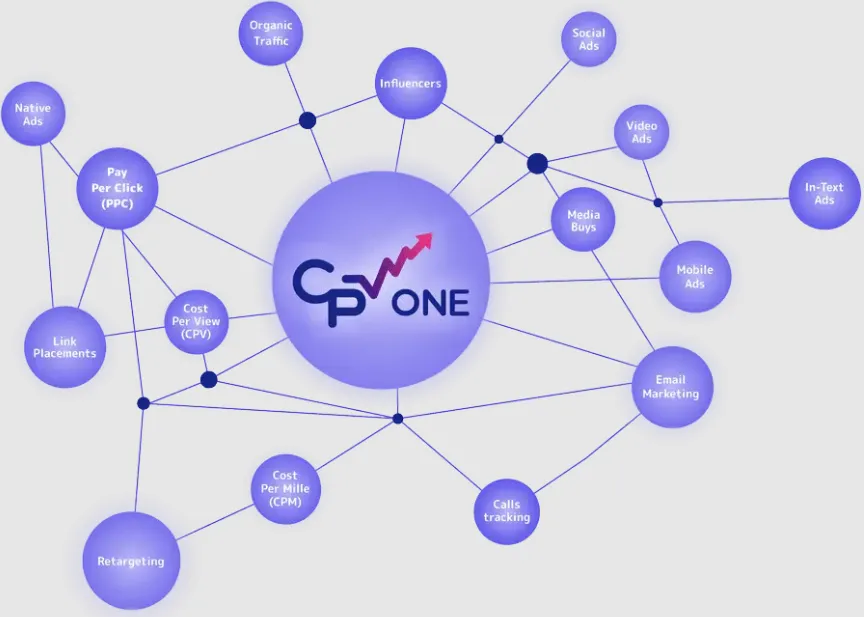
We’re building in that direction with CPV One. The central hub idea – one place where all your campaign data lives and from which everything else is orchestrated – that’s the product we’re working towards. The next two or three years are going to be interesting.
16. Someone installs CPV Lab this week and has never tracked properly before. What’s the first thing you’d have them set up, and what should they ignore until they’re ready?
The very first thing: set up a custom tracking domain.
It sounds more technical than it is, and it makes a significant difference. A custom tracking domain means your tracking links run on your own domain, which protects against ad blockers, ensures that you use first-party data from the start, and gives you a much cleaner data foundation to build on. For CPV Lab, which is already self-hosted, this is built into the setup from day one. For CPV One, it’s one of the first things we recommend configuring.
Beyond that: connect one traffic source, set up one campaign, and focus on understanding what the data is actually telling you before you try to do anything fancy. The platform has a lot of capability – rules, alert profiles, multi-step funnels, API integrations – but none of it helps if you don’t first understand what clean data looks like and how to read it.
What to ignore at first: redirect profiles or alert rules. Don’t set redirect profiles and optimization rules until you’ve manually managed a few campaigns and you understand the patterns. Automation amplifies both good decisions and bad ones. Get the fundamentals solid first, then hand things off to the system.
Ready to own your tracking data instead of renting it?
Our chat with Julia Draghici covered the unglamorous side of performance marketing, the part nobody posts screenshots of but everybody needs. She walked us through why the era of passive pixel tracking is finished, and why the buyers sending conversion data back to their traffic sources are getting better results than the ones who aren’t.
We’re building in that direction with CPV One. The central hub idea – one place where all your campaign data lives and from which everything else is orchestrated – that’s the product we’re working towards. The next two or three years are going to be interesting.
Her biggest point was about the feedback loop. If your ad platform never learns which visitors converted, its algorithm keeps guessing, your CPA drifts up, and the campaign looks fine while it quietly underperforms. She also shared a detail most buyers skip entirely, passing customer information alongside conversion events on Meta, TikTok, and Snapchat to sharpen match quality.
Julia’s advice for anyone starting from scratch was refreshingly simple. Set up a custom tracking domain, connect one traffic source, run one campaign, and learn to read clean data before touching any automation rules.
With AI tools now sitting on top of every marketing stack, clean first party data has never been worth more. Is yours ready for it?
Similar Posts




Ali
Aliakbar Fakhri is a top affiliate marketer and the founder of AFFiNCO, an agency driving business growth through affiliate strategies for over a decade. Based on his 10+ years of experience, Ali shares battle-tested insights to help marketers succeed. Follow him on the AffDude blog for more tips!
Julia Draghici
Julia Draghici, CEO of CPV Lab Pro, combines a background in computer science and economics with years of experience developing marketing platforms and leading teams of 10–15 developers.