


Admitad works fine, until it doesn't. Payouts slow down, approval rules tighten, and certain niches stop fitting the platform at all. Affiliate marketers and content creators start noticing a gap between what a network promises and what it actually delivers.
That's when interest in Admitad alternatives begins, quietly, almost out of necessity. Some platforms offer stronger tracking. Others unlock brands Admitad simply doesn't carry. A few solve problems beginners don't even realize exist yet.
Every affiliate network hides strengths behind polished homepages, and weaknesses buried deep in fine print. Comparing options without real testing wastes both time and budget. What actually separates a solid alternative from a mediocre one rarely shows up on the surface.
Why Marketers Are Searching for Admitad Alternatives Right Now
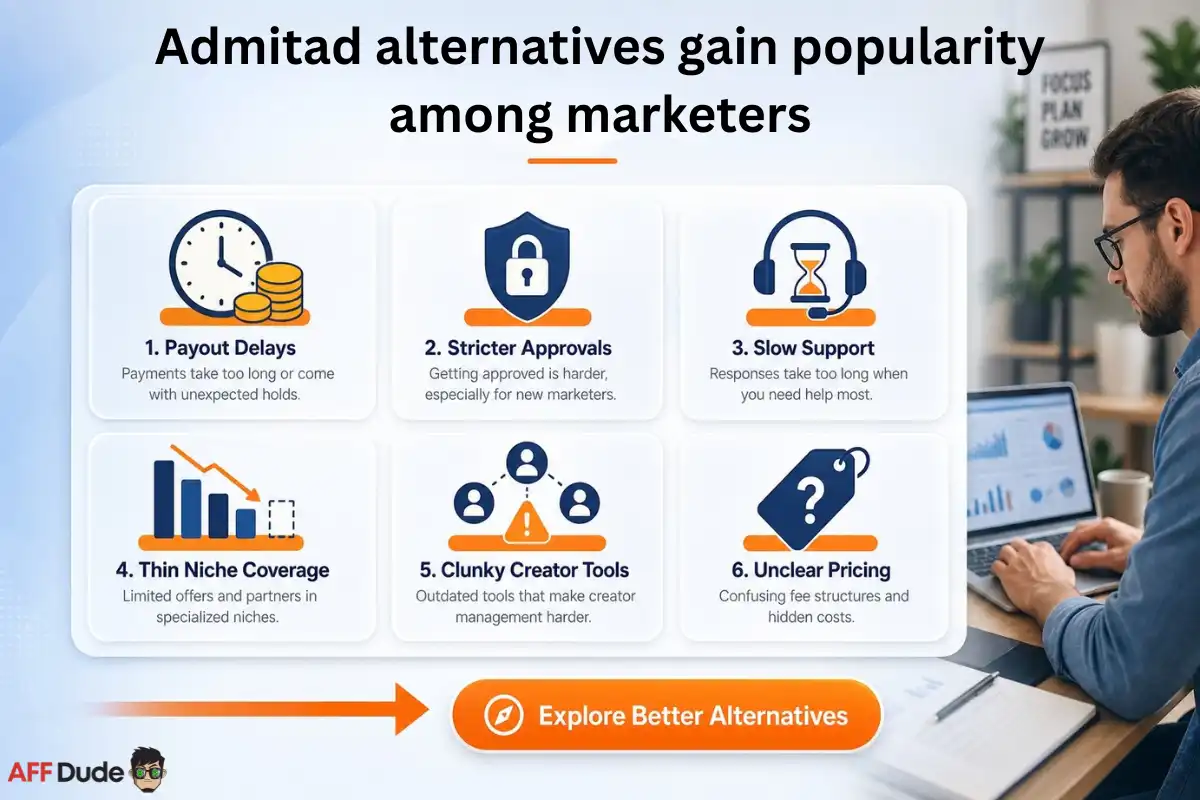
Admitad has served affiliate marketers for years, but recent shifts in the platform's structure are pushing brands to look elsewhere. Payout delays, network restructuring, and shrinking publisher support top the list of complaints.
Several factors drive this search pattern:
Business owners running creator-led programs face a different problem. Admitad organizes around publisher networks, so recruiting and managing individual creators end-to-end can feel clunky. Teams need tools built for outreach, content tracking, and payments in one workflow.
Pricing transparency plays a role too. Some alternatives publish clear rate structures upfront, while Admitad's fee breakdown can feel harder to pin down for first-time users.
Understanding these pain points matters before comparing options. What works for a large publisher network won't necessarily suit a Shopify brand running a lean affiliate program. The next section breaks down what to check before making that switch.
What to Check Before Switching to an Admitad Alternative
Switching affiliate platforms takes planning. A rushed move can cost tracking history, active partnerships, and revenue data that took months to build.
Start with these checks:
Data migration deserves attention too. Historical performance reports, active affiliate links, and commission records should transfer smoothly, or at least export cleanly for reference.
Trial periods help here. Testing a platform with a small campaign segment reveals real performance gaps before a full commitment.
Once these factors are clear, matching a platform to your specific business model becomes far easier.
8 Best Admitad Alternatives Worth Testing in 2026
| Best Admitad Alternatives | Tracking Method | Payout Speed |
|---|---|---|
| Awin | Cookie-based MasterTag tracking | Net-30, $20 minimum |
| impact.com | Server-to-server, cross-device | Varies by advertiser terms |
| CJ Affiliate | Pixel and cookie tracking | Net-20, $50 minimum |
| PartnerStack | Referral link attribution | Monthly single invoice |
| Refersion | First-party, cookie-free domain | One-click, PayPal supported |
| UpPromote | Link, coupon, and email tracking | Auto PayPal on Growth+ |
| ClickBank | HopLink URL tracking | Weekly or biweekly, $10 minimum |
| Rakuten Advertising | Deep-linking, pixel tracking | Net-60, $50 minimum |
1. Awin
Awin ranks among the largest global affiliate networks and stands as one of the most established Admitad alternatives for brands running large scale partner programs.
Founded in Germany in 2000, the platform grew through several mergers, including its acquisition of ShareASale, whose platform officially closed in October 2025 after migrating every advertiser and publisher account onto Awin.
Today Awin connects brands with over one million publishers, coupon sites, cashback platforms, and content creators across dozens of countries. Retailers use it to launch programs quickly, set flexible commission rules by product or category, and tap into AI powered partner recommendations.
Agencies managing multiple client accounts also rely on Awin for its scale, though newer merchants sometimes find onboarding takes longer than smaller platforms.
| Field | Details |
|---|---|
| Company Type | Private, Axel Springer owned |
| Team Size | 1,400+ employees |
| Industry Category | Affiliate marketing network |
| Official Website | awin.com |
Best For
Brands and agencies scaling affiliate programs across a large, established global network of coupon, cashback, content, and influencer partners with flexible commission controls.
2. impact.com
impact.com operates as an AI native partnership management platform and one of the most comprehensive Admitad alternatives for mid market and enterprise brands.
Founded in Santa Barbara in 2008 by Per Pettersen, the company built its reputation on unifying affiliate, influencer, and referral programs inside a single dashboard.
Rather than tracking clicks alone, impact.com attributes results to actual revenue and lifetime value, giving marketers a clearer view of which partnerships actually convert.
Its Partner Marketplace connects brands to roughly 90,000 vetted partners, with advanced fraud scoring and cross device tracking available on higher tiers.
In April 2026, impact.com entered a strategic alliance with Rakuten Advertising, combining Rakuten's managed services with impact.com's tracking infrastructure, a move that expanded its reach across the partnership marketing industry considerably.
| Field | Details |
|---|---|
| Company Type | Privately held company |
| Team Size | 1,001 to 5,000 employees |
| Industry Category | Partnership management SaaS |
| Official Website | impact.com |
Best For
Mid market and enterprise brands wanting affiliate, creator, and referral programs on one platform with revenue based attribution and fraud protection.
3. CJ Affiliate
CJ Affiliate, formerly known as Commission Junction, is one of the oldest performance marketing networks in the industry and a natural Admitad alternative for enterprise level programs. Founded in Santa Barbara in 1998, the platform now operates under Publicis Groupe and connects thousands of global brands with publishers worldwide.
Its scale is the main draw. CJ reports over one billion monthly consumer reach and processes well over 150 million annual transactions, giving advertisers access to premium, established publisher relationships across retail, travel, and finance verticals.
Publisher vetting happens before commissions are approved, which helps reduce fraud exposure. Pricing is not published publicly, so brands need to contact CJ directly, and the learning curve tends to be steeper than smaller platforms offer.
| Field | Details |
|---|---|
| Company Type | Subsidiary of Publicis Groupe |
| Industry Category | Performance marketing network |
| Official Website | cj.com |
| Regional Offices | US, UK, Germany, France |
Best For
Enterprise brands and agencies seeking scale in an established global network with premium advertiser relationships and rigorous publisher vetting standards.
4. PartnerStack

PartnerStack built its name as a partner relationship management platform designed specifically for B2B SaaS companies, making it a distinct Admitad alternative for software businesses rather than traditional ecommerce brands. Founded in Toronto in 2015 by Bryn Jones and his co-founders, the company grew around affiliate, referral, and co-sell partnership motions.
Its Partner Marketplace connects SaaS businesses to more than 144,000 active B2B partners, and commission payouts run through a single monthly invoice regardless of partner count. Companies like Asana and Freshworks have used the platform to scale channel programs.
In April 2026, AppDirect acquired PartnerStack, positioning the combined company to strengthen marketplace led growth and partner ecosystem management for software vendors going forward.
| Field | Details |
|---|---|
| Company Type | Subsidiary of AppDirect |
| Team Size | 275+ employees |
| Industry Category | B2B partnership SaaS |
| Official Website | partnerstack.com |
Best For
B2B SaaS companies running affiliate, referral, and co-sell programs that need a partner marketplace tuned specifically for software buyers.
5. Refersion
Refersion focuses on ecommerce brands running affiliate, influencer, and ambassador programs, positioning it as a practical Admitad alternative for Shopify and WooCommerce merchants. Founded by Alex Markov, the platform built its reputation on first party tracking that attributes sales without relying on browser cookies.
Merchants create a free public listing in the Refersion Marketplace, where affiliates apply directly, while personalized discovery tools help recruit additional partners beyond that pool. One click payouts, including PayPal support, remove the manual spreadsheet work many smaller brands struggle with.
Pantastic acquired Refersion in 2023, and the platform now operates under that ownership while continuing to serve ecommerce brands seeking cookie free attribution and simpler affiliate management.
| Field | Details |
|---|---|
| Company Type | Private, Pantastic owned |
| Industry Category | Ecommerce affiliate software |
| Official Website | refersion.com |
| Ownership Change | Acquired 2023 |
Best For
Ecommerce and DTC brands wanting cookie free tracking, one click payouts, and a public marketplace where affiliates apply directly.
6. UpPromote
UpPromote serves as a Shopify native affiliate and referral app, offering one of the more affordable Admitad alternatives for small and mid sized ecommerce brands. Built by the Secomapp team, the app carries Shopify's Built for Shopify badge and holds a 4.9 rating from thousands of merchant reviews.
Store owners can launch a program, generate affiliate links, and set commission rules directly inside their Shopify dashboard without touching external software. Multi level marketing structures, coupon tracking, and automated PayPal payouts are all included on paid tiers, while a genuinely usable free plan covers basic needs.
Health, wellness, and apparel brands make up a large share of its user base, drawn by the simple setup and responsive customer support team.
| Field | Details |
|---|---|
| Company Type | Private, Secomapp product |
| Industry Category | Shopify affiliate application |
| Official Website | uppromote.com |
| Top User Base | Health, wellness, apparel brands |
Best For
Shopify merchants and small brands wanting an affordable, easy to launch affiliate program without leaving their existing store dashboard.
7. ClickBank
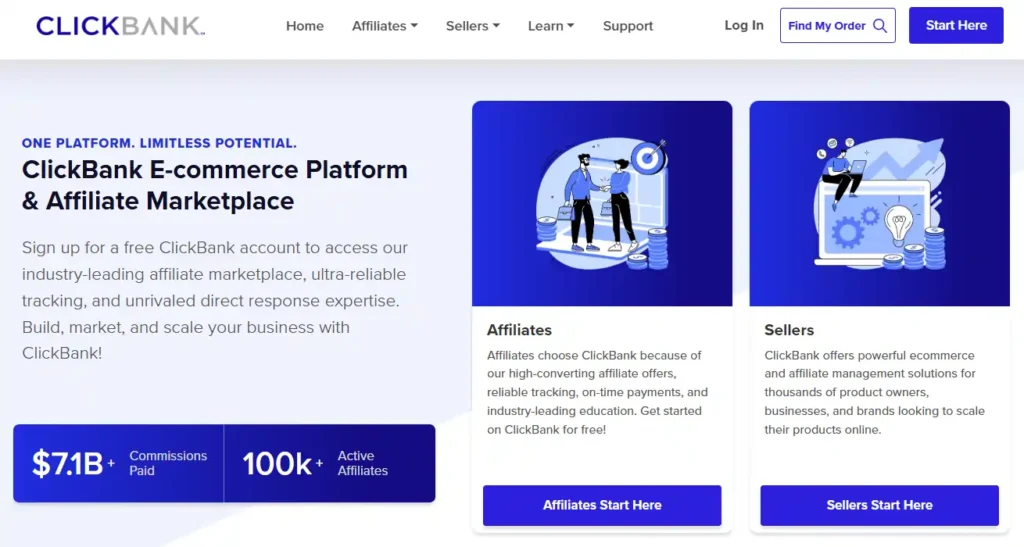
ClickBank combines a retailer platform with a built in affiliate marketplace, making it a longstanding Admitad alternative for digital product creators and direct response sellers. Founded in Boise in 1998 by Tim and Eileen Barber, the company has operated as a privately held business for over two decades.
Sellers list digital or physical products, affiliates browse the marketplace and choose what to promote, and ClickBank itself processes payments and distributes commissions. This removes the need for sellers to build separate billing or affiliate infrastructure from scratch.
The platform is best known in ebook, course, and software niches rather than mainstream retail, and a one time activation fee applies before sellers can list their first product.
| Field | Details |
|---|---|
| Company Type | Private, Click Sales Inc |
| Industry Category | Ecommerce and affiliate marketplace |
| Official Website | clickbank.com |
| Legal Entity Name | Click Sales Inc |
Best For
Digital and direct response sellers wanting a built in affiliate marketplace with handled payments and no separate billing setup required.
8. Rakuten Advertising

Rakuten Advertising has operated as a global affiliate network since 1997, making it one of the most established Admitad alternatives for brands seeking premium retail, finance, and travel partnerships. Originally known as LinkShare before Rakuten acquired it, the platform has since rebranded twice, most recently in 2020.
Publishers gain access to major brands across banking, fashion, and travel verticals, supported by deep linking tools and consistent tracking accuracy. Payment terms run on a Net 60 schedule, which some publishers find slower compared to newer networks.
In April 2026, Rakuten formed a strategic alliance with impact.com, combining Rakuten's managed services and consumer data with impact.com's tracking technology, reshaping how advertisers on both platforms will access partnership infrastructure going forward.
| Field | Details |
|---|---|
| Company Type | Division of Rakuten Group |
| Industry Category | Global affiliate advertising network |
| Official Website | rakutenadvertising.com |
| Regional Offices | EMEA, APAC, LATAM, North America |
Best For
Publishers and brands seeking access to premium banking, retail, and travel partnerships backed by decades of affiliate network experience.
How to Choose the Right Admitad Alternative for Your Business Model
Not every affiliate platform fits every business. The right choice depends on program size, industry, and how partnerships actually get managed day to day.
Consider these factors first:
Matching these factors against platform strengths narrows the list quickly. A brand running a lean Shopify store rarely needs the same tool as an enterprise managing thousands of publishers.
Once the right fit becomes clear, avoiding common testing mistakes keeps the transition smooth.
Common Mistakes Brands Make When Testing Admitad Alternatives
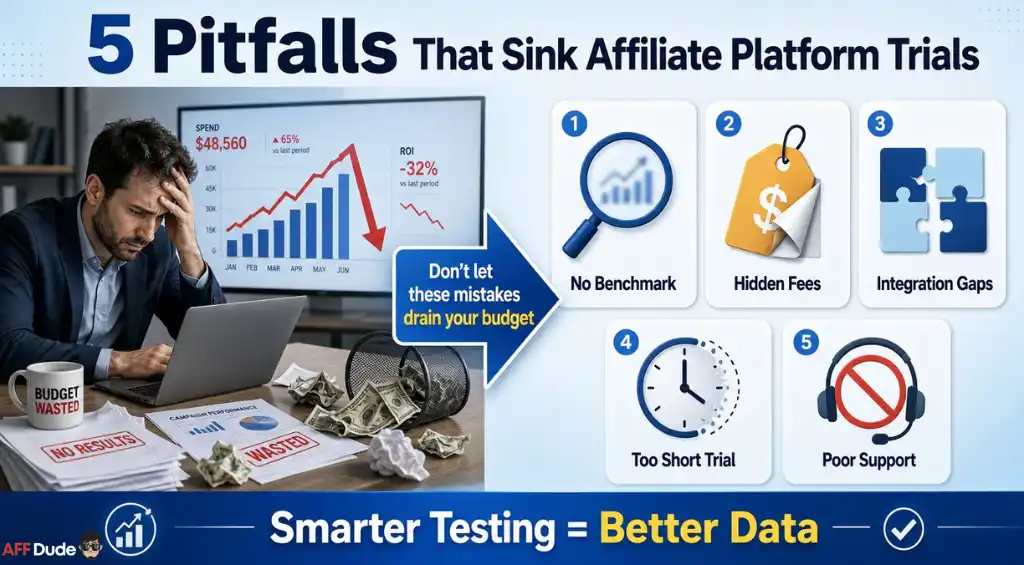
Testing a new platform sounds simple, but brands often skip steps that cause problems later. These mistakes can waste weeks and distort real performance comparisons.
Frequent errors include:
Brands also tend to migrate everything at once instead of running both platforms in parallel. This makes it harder to isolate what's actually driving results.
Avoiding these missteps protects both budget and data accuracy. With the right approach, comparing alternatives becomes a clearer, more reliable process.
Moving Forward With Confidence
Every platform on this list solves a different problem. Some fit large publisher networks, others work better for creator-led programs, and a few suit small Shopify stores just starting out.
What matters most is matching the tool to how your program actually runs day to day, not just its feature list on a sales page.
Admitad alternatives keep evolving as networks merge and pricing shifts. Testing a platform with real data, even briefly, tells you more than any comparison ever could. Give your program time to breathe before judging results.
Recommended Articles

Affiliate Disclosure: This post may contain some affiliate links, which means we may receive a commission if you purchase something that we recommend at no additional cost for you (none whatsoever!)