7 Best Ecommerce Affiliate Programs in 2026 for Publishers
 11 min read
A blogger drops one store link into an old gear post and forgets about it. Three months later a $9 commission shows up. Most people stop looking right there. What if the exact same link had paid 20%?
Retail brands quietly widened their affiliate terms this year, with longer cookie windows and tiered payouts on repeat buyers. Searches for the best ecommerce affiliate programs keep climbing because the gap between a weak program and a strong one now shows up on your invoice.
What AFFDude Says: Commission rate gets all the attention, and it is the least reliable number on the page. Approval speed and whether the brand actually converts tell you a lot more. Plenty to unpack below.
How We Scored These Ecommerce Affiliate Programs
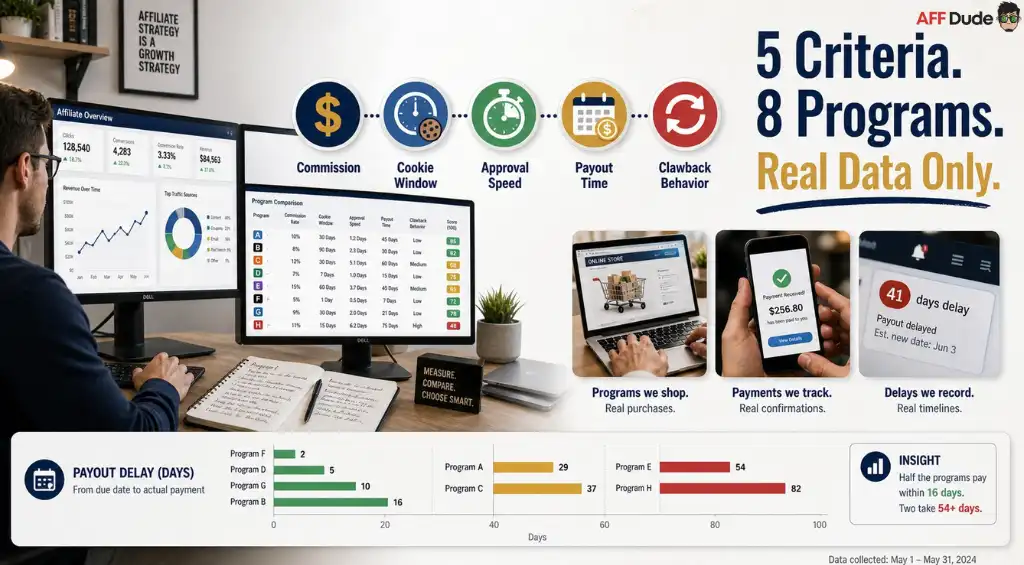
Scoring came from live account data rather than press pages. We hold active accounts in all eight ecommerce affiliate programs and pulled figures from those dashboards between March and August 2026.
Five criteria decided the ranking:
A few examples of how that played out. One Shopify signup credited 41 days after the original click because the trial began inside the 30-day window. Amazon reversed two orders in June, which pulled its payout reliability score down. Awin cleared a test site with 900 monthly visits in six days.
We also collected numbers from 11 affiliates in our network who run these same programs at larger volume. Their input on payout delays and affiliate manager response times fed straight into the scores.
Raw figures and weights sit beside each program below.
The 7 Ecommerce Affiliate Programs Worth Your Traffic
| Best Ecommerce Affiliate Program | Content Format That Converts | Strongest Traffic Geo |
|---|---|---|
| Amazon Associates | Seasonal gift roundups | US, UK, Germany |
| Shopify | Store setup tutorials | US, Canada, Australia |
| Walmart | Grocery and budget hauls | United States only |
| Etsy | Wedding and decor guides | US, UK, Europe |
| Flipkart | Mobile and appliance reviews | India only |
| Fiverr | Hire-a-freelancer walkthroughs | Global, US-weighted |
| Yotpo | Retention strategy explainers | US, Israel, Europe |
1. Amazon Associates
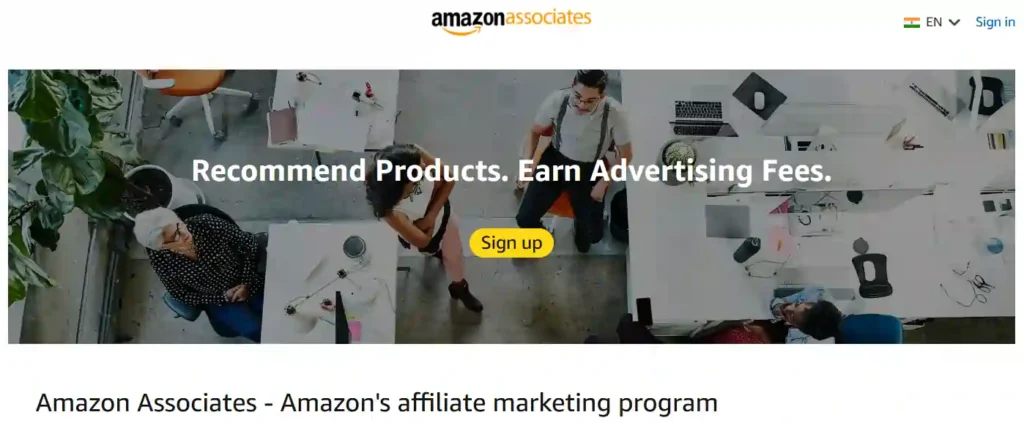
Amazon Associates stays the default entry point for anyone building content around physical products. Rates run from 1% to 20% depending on category, and the rate follows what the shopper actually buys rather than the item you linked.
Attribution is where it gets tight. The click opens a 24 hour window to reach the cart, after which items already added stay eligible for roughly 90 days.
New accounts also carry a probation clause, so three qualifying sales inside 180 days decide whether the account survives. For gift guides and product roundups, conversion rates still make up for the thin percentages.
Best for: Review sites and gift-guide publishers with steady product traffic. Highest conversion rate in ecommerce affiliate programs, which offsets low category rates on volume.
2. Shopify Affiliate Program
Bounty payouts change how you plan content, and Shopify pays one of the largest in this niche. A referred merchant on a full price Basic, Grow or Advanced plan earns up to $150, once, with no cap on how many you refer.
Geography decides your real number. Top tier markets including the US, UK, Canada and Germany hit the $150 ceiling, while India sits near $25 and Brazil near $10.
The 30 day cookie reads short until you check the trial clause. A trial started on your click keeps tracking for up to 400 days until the store starts paying.
Best for: Ecommerce bloggers, dropshipping channels and course creators teaching store setup. Strongest option when audiences sit in top tier payout countries.
3. Walmart Affiliate Program
Ranked second in US ecommerce, Walmart runs a program that behaves like a gentler version of Amazon's. Category rates land between 1% and 4%, with clothing, home, baby, health and sports at the top end.
Attribution is the real advantage here. Walmart holds a 72 hour cookie, three times Amazon's window, which gives slower purchase decisions room to close.
The standard program sits on Impact and approval usually clears within a day. A separate track, Walmart Creator, serves social creators who want storefronts and higher rates on selected categories without owning a site.
Best for: Household, grocery and budget-shopping content aimed at US readers. Suits creators who want easier approval and a longer window than Amazon allows.
4. Etsy Affiliate Program
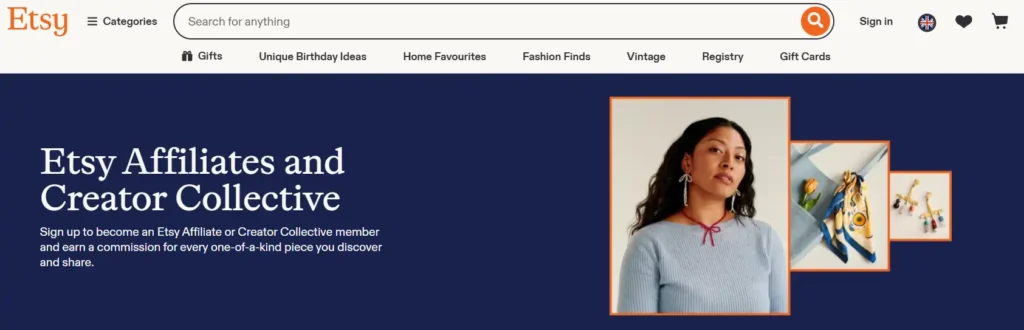
Gift, handmade and vintage traffic has one obvious destination, and Etsy built its program around that reader. Content publishers earn 4% on qualifying sales, while cashback and voucher sites sit at 2%.
Cookie length depends on the surface. Web clicks carry 30 days, app clicks carry seven, and payouts clear monthly on net 30 terms above a $20 threshold.
Two rules trip up sellers. Sales from your own shop earn nothing, and gift card orders stay outside commission. The program has run through Awin, with a reported move to Rakuten during 2026, so confirm the current network before applying.
Best for: Gift guide writers, wedding and craft bloggers, home decor creators. Modest rate, strong emotional purchase intent, and repeat buying around seasonal peaks.
5. Flipkart Affiliate Program
Flipkart occupies an odd position among ecommerce affiliate programs. The catalogue is enormous and Indian traffic converts well, yet direct public signups have stayed shut for years.
Access now runs through Indian aggregator networks such as Cuelinks, EarnKaro and ExtraPe, which already hold the Flipkart relationship and pass category commissions to publishers. Approval through them is quick, with no traffic minimum and no website requirement in most cases.
Rates shift by category and by the aggregator you route through, so compare two networks on the same product before building content around either.
Best for: Indian publishers and creators covering mobiles, appliances and fashion. Practical route to Flipkart inventory when direct enrolment stays unavailable.
6. Fiverr Affiliate Program
Service spend rather than product spend earns Fiverr its place on this list. The current model pays 25% of a first-time buyer's marketplace order, or 70% on Fiverr Pro, plus 10% revenue share on that buyer's spending across the following 12 months.
Dynamic CPA carries a $500 ceiling per conversion, so one very large Pro order has a limit.
Cookies hold 30 days from first click, and withdrawals need $100 in the account. Store owners search for designers, developers and SEO help constantly, which makes this an easy fit alongside platform reviews.
Best for: Blogs covering freelancing, agency workflows and store setup services. Hybrid structure rewards audiences that keep hiring after their first order.
7. Yotpo Affiliate Program

Recurring revenue enters the picture with Yotpo, whose reviews, UGC and loyalty products sell to the same merchants reading your platform content.
Commission opens at 30% for the first three months of a referred subscription, then continues at a lower rate across a 12 month total term. Attribution runs 90 days, which matches software buying cycles far better than a marketplace cookie.
Applications get answered within roughly three business days. Shopify merchants, agency owners and ecommerce educators respond well here, since review collection sits near the top of most retention checklists.
Best for: Publishers with a merchant or agency audience. Fits retention and conversion content better than shopper-facing reviews, and pays across a longer term.
Traffic Sources That Convert on Ecommerce Affiliate Programs
Traffic quality moves earnings more than the commission rate does. The same link can pay well from a review page and stall on a social feed, so source fit belongs in the plan before promotion starts.
What performed best across our accounts:
Coupon and deal placements convert quickly, though some programs pay a reduced rate on discount codes or exclude them from attribution altogether.
Source rules matter too. Etsy pays roughly half on social links compared with site links. Amazon closes its window after 24 hours, which rewards search traffic and punishes slow drip channels.
Paid traffic carries its own set of restrictions, covered next.
PPC and Trademark Rules in Ecommerce Affiliate Programs
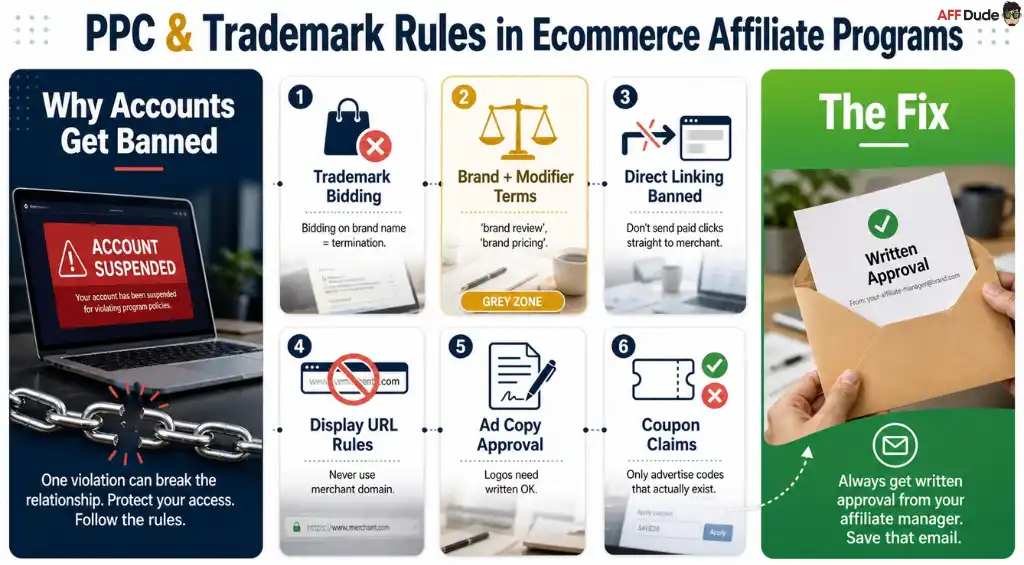
Paid search is where affiliate accounts get closed. Most ecommerce affiliate programs restrict bidding on brand terms, and breaking that clause risks reversed commissions alongside a permanent ban.
Restrictions worth reading before any campaign goes live:
Written approval from your affiliate manager settles the grey areas. Keep that email.
Where Ecommerce Affiliate Programs Leave You
After running these accounts side by side, one thing stands out. The payout rate matters far less than how long the tracking lasts and how reliably the money clears. A 4% program with a real cookie window often quietly beats a 20% offer that credits almost nothing.
Two or three ecommerce affiliate programs, matched to what your readers already buy, tend to hold up better than a long list of signups you rarely use.
Start with one that fits your traffic, watch it for a quarter, then decide what comes next.
Recommended Articles