
Here's a number that should worry every affiliate marketer. 57% of all Google searches now end as a zero-click search — no external website visit, no affiliate link seen. That's not a future prediction. That's happening right now.
AI search engines, AI Overviews, and featured snippets are answering user queries directly on the results page.
For affiliates who rely on organic search traffic for revenue, the old playbook of ranking and banking is fading fast. Google's AI Mode alone sees 93% of sessions end without an external visit. If your entire affiliate marketing strategy depends on clicks from search, you're building on a shrinking foundation.
But here's the good news. Affiliates who adapt early will gain a serious advantage. At AffDude, we've studied how zero-click search behaviour is reshaping affiliate SEO. And in this guide, we'll break down exactly what's changing and how to stay ahead.
What Are Zero-Click Searches and Why Should Affiliates Care?
A zero-click search happens when someone gets an answer directly on a search results page. They never visit any website. Google does it through featured snippets, knowledge panels, and now AI Overviews.
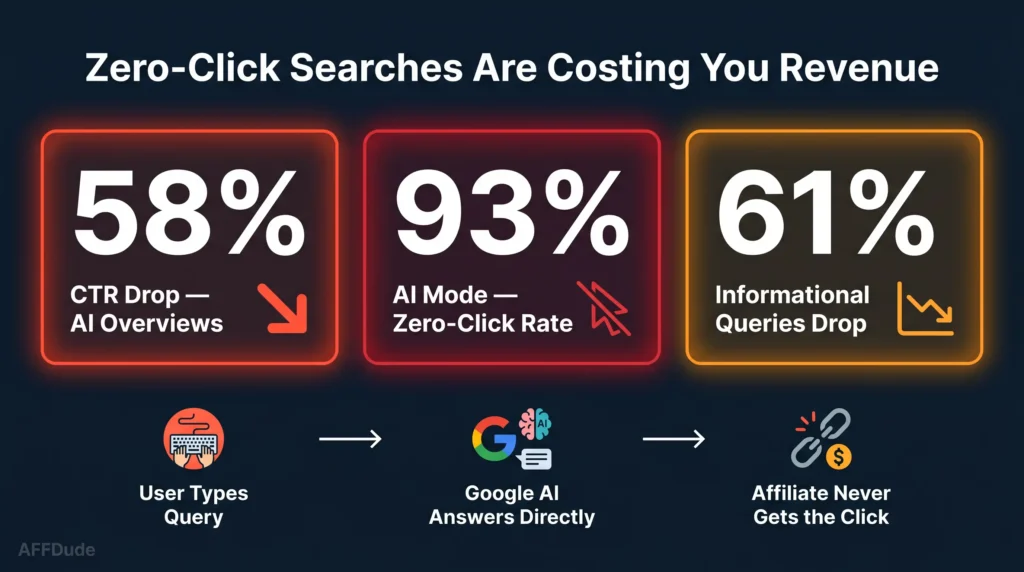
For affiliates, clicks equal revenue. No click means no chance to show an affiliate link. A recent Ahrefs study found that AI Overviews reduce click-through rates by 58% for top-ranking pages. Seer Interactive reported an even steeper drop of 61% on informational queries.
Here is what makes it worse. AI Mode zero-click searches end without a click 93% of the time. That is nearly double compared to standard AI Overviews, where 43% result in zero clicks.
These numbers should alarm every affiliate marketer who depends on organic search traffic for income. And they should push you to rethink how you create content, choose keywords, and drive revenue.
How Google AI Overviews Are Reshaping Affiliate Marketing
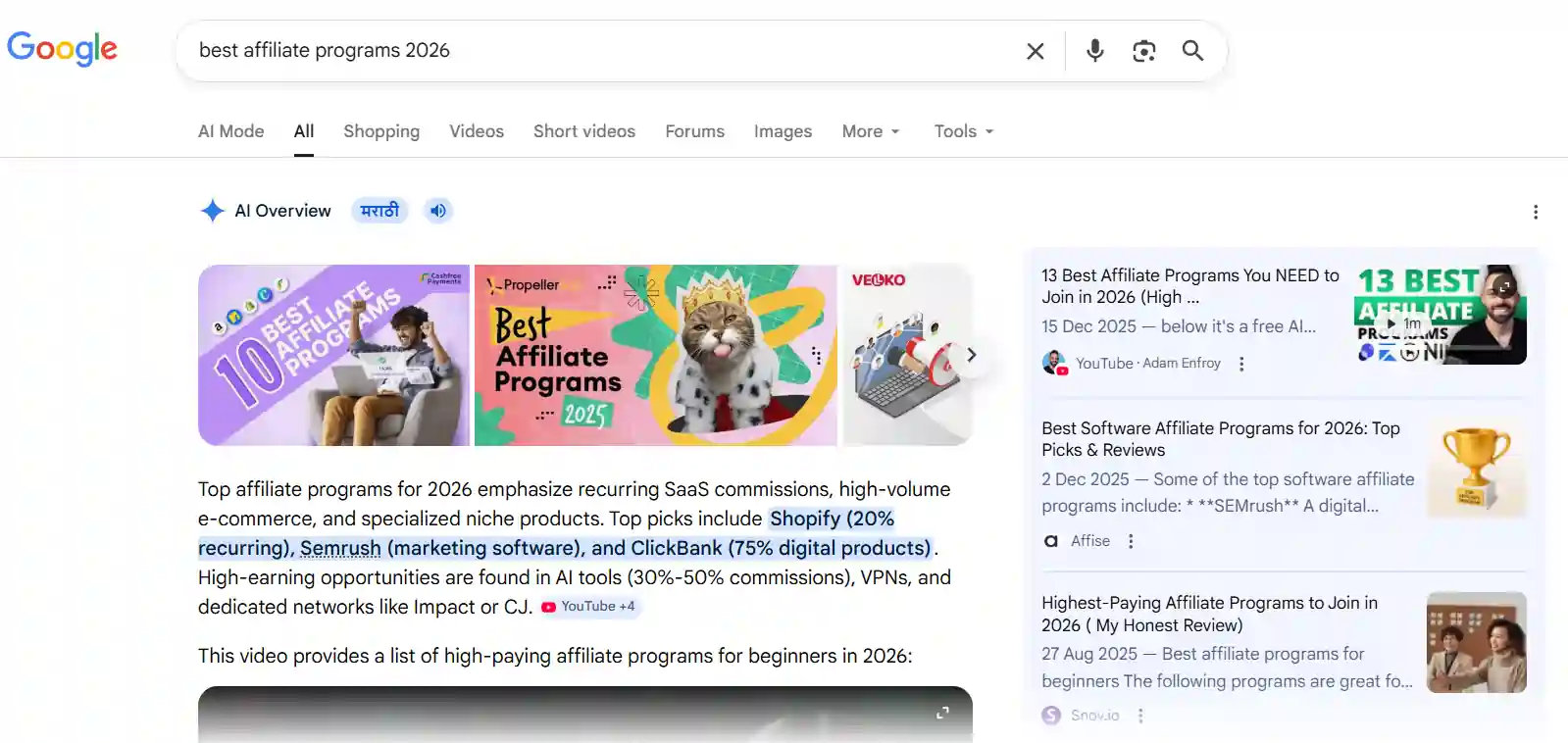
Google AI Overviews pull content from multiple sources and present a summary right at the top of search results. Users get a neat, compiled answer without scrolling through ten blue links.
For product comparison queries and “best of” lists, AI Overviews often include enough detail that readers feel satisfied. They do not need to visit your carefully crafted review page anymore. A Semrush study of over 10 million keywords found that 15.69% of searches now show AI summaries.
But here is the flip side. Pages cited within AI Overviews can see up to 35% more clicks. So being referenced by AI is now just as important as ranking on page one.
At Affdude, we noticed that content structured with clear, factual answers tends to get cited more often. Vague or fluffy paragraphs rarely make it into AI-generated summaries. Writing tight, fact-driven content is now a must.
AI Search Engines Beyond Google: ChatGPT, Perplexity & Gemini
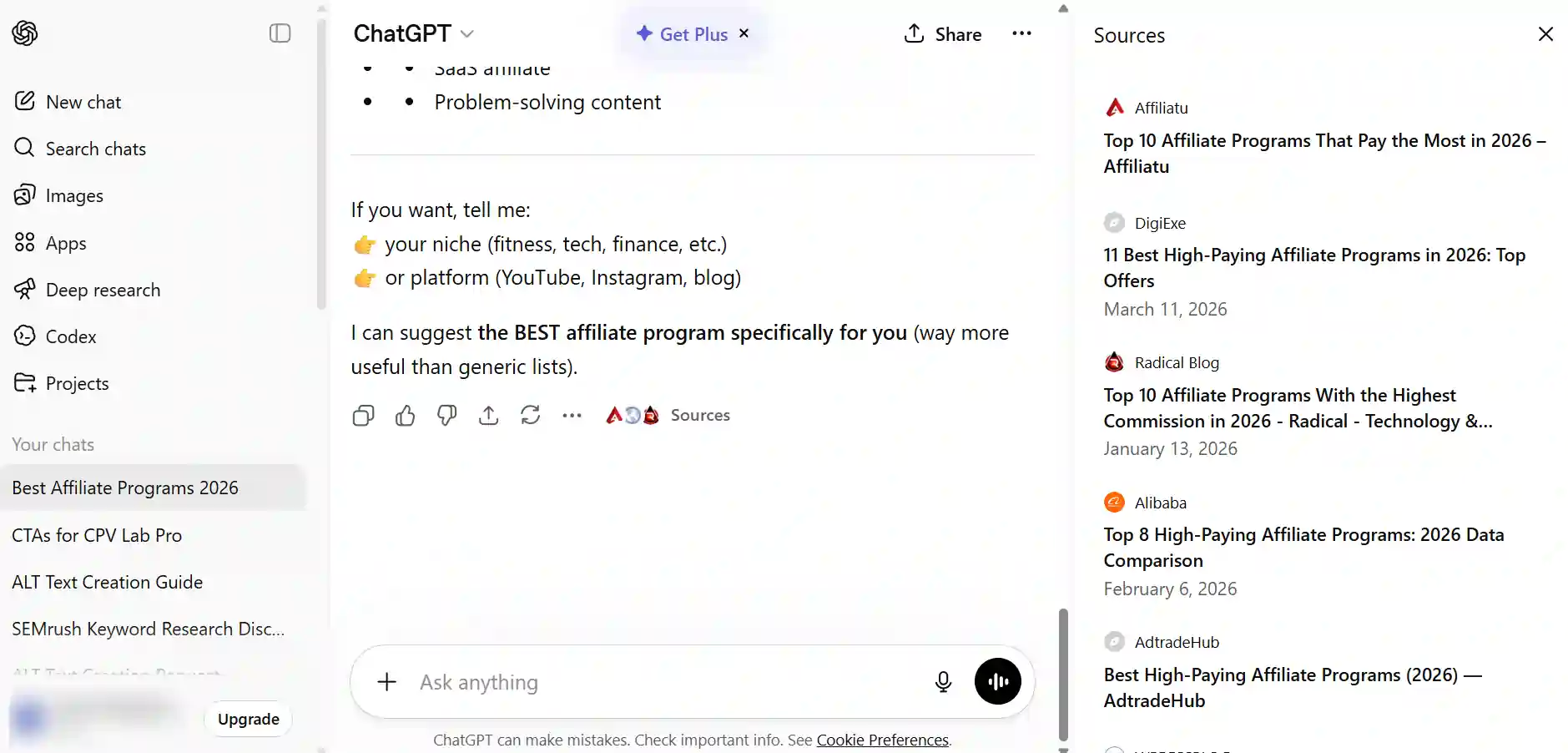
Google is not alone in pushing AI-powered search results. ChatGPT now integrates with Bing and delivers contextual answers. Perplexity AI blends conversational AI with search indexing. Google Gemini combines text, images, and video in responses.
Each platform handles citations differently. Perplexity is more likely to cite sources than other AI tools. It often includes images, video, and text references in answers. ChatGPT traffic converts at a staggering 15.9%, while Perplexity converts at 10.5%. Compare that to Google organic traffic at just 1.76%.
That means traffic from AI search engines is smaller in volume but far more valuable in terms of conversions. Smart affiliates are already optimising for multiple AI platforms, not just Google. If you only focus on Google rankings, you are leaving money on the table.
Why Traditional Affiliate SEO Strategy No Longer Works
Most affiliate SEO strategies from 2022 or 2023 are outdated. Writing a 3,000-word review stuffed with keywords and hoping Google sends traffic just doesn't cut it anymore.
Here's what's changed:
69% of publishers are worried Google algorithm changes and AI Overviews are already reducing affiliate revenue. At AffDude, we saw it firsthand. So we changed our approach entirely.
7 Ways Affiliates Can Adapt to Zero-Click Search in 2026
1. Optimise Content for AI Citations
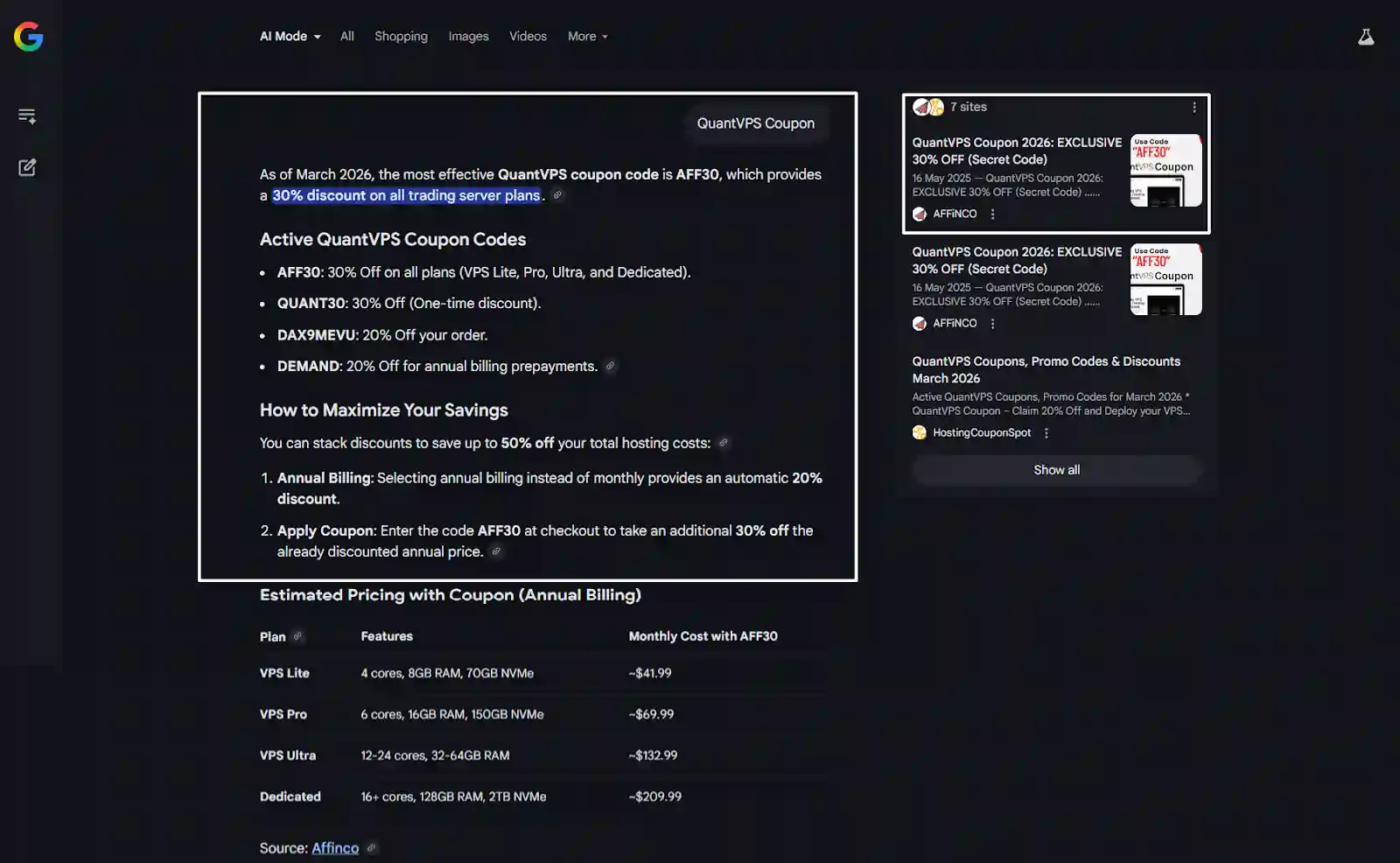
Write content that AI can easily extract and reference. Front-load answers in every section. Place key facts in opening sentences, not buried deep in paragraphs.
Use structured data and schema markup on every page. FAQ schema, product schema, and review schema all help AI engines understand your content better. Google uses structured data to populate AI Overviews with accurate, source-attributed information.
Keep paragraphs short. Write in clear, simple language. AI favours content that delivers standalone clarity, meaning each paragraph should make sense even if pulled out of context. Your first 200 words matter more than anything else on a page.
2. Build Brand Authority Across Multiple Platforms
If AI cannot trust you, your content will not get cited. Build brand visibility in AI search by maintaining a strong presence on:
Perplexity tends to favour recent, authoritative content. Regular updates and multi-platform presence increase chances of getting referenced. We have seen first-hand at Affdude that having both a blog and YouTube channel increases AI citation rates noticeably.
3. Target Commercial and Transactional Intent Keywords
AI Overviews mostly appear on informational queries. Commercial keywords like “buy,” “discount,” “pricing,” and “vs” still drive clicks because users need to take action.
Focus your affiliate content strategy on:
These keywords are harder for AI to fully satisfy. Users still need to visit a page to complete a purchase or grab a coupon. At Affdude, coupon and deal pages still drive strong click-through rates even as informational traffic declines.
4. Use Semrush to Track AI Visibility and Keyword Gaps
Semrush has become essential for affiliates navigating AI search. With a database of 27 billion keywords and 43 trillion backlinks, it remains one of the most powerful SEO analysis tools for affiliates.
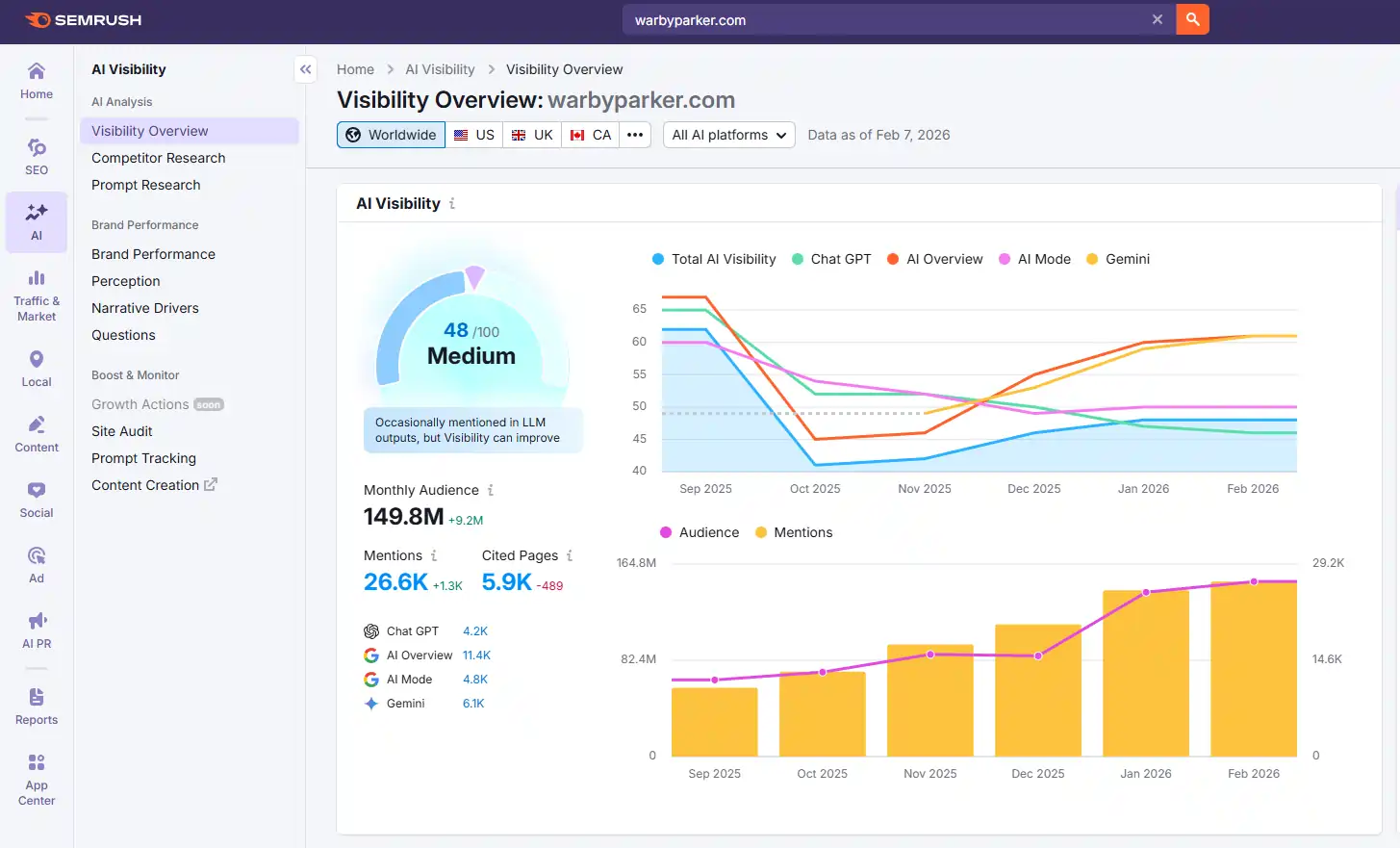
Semrush recently launched an AI Visibility Toolkit that tracks how AI platforms perceive your brand. Here is what it offers:
| Semrush AI Visibility Feature | What It Does |
|---|---|
| Visibility Overview | Shows your brand's overall presence across AI search platforms |
| Competitor Research | Reveals where competitors get AI citations and you do not |
| Prompt Tracking | Monitors visibility for specific prompts on Google AI Mode and ChatGPT |
| AI Search Site Audit | Flags technical issues that block AI bots from crawling your site |
| AI Search Visibility Checker | Free tool to benchmark brand visibility across ChatGPT, Gemini, and AI Overviews |
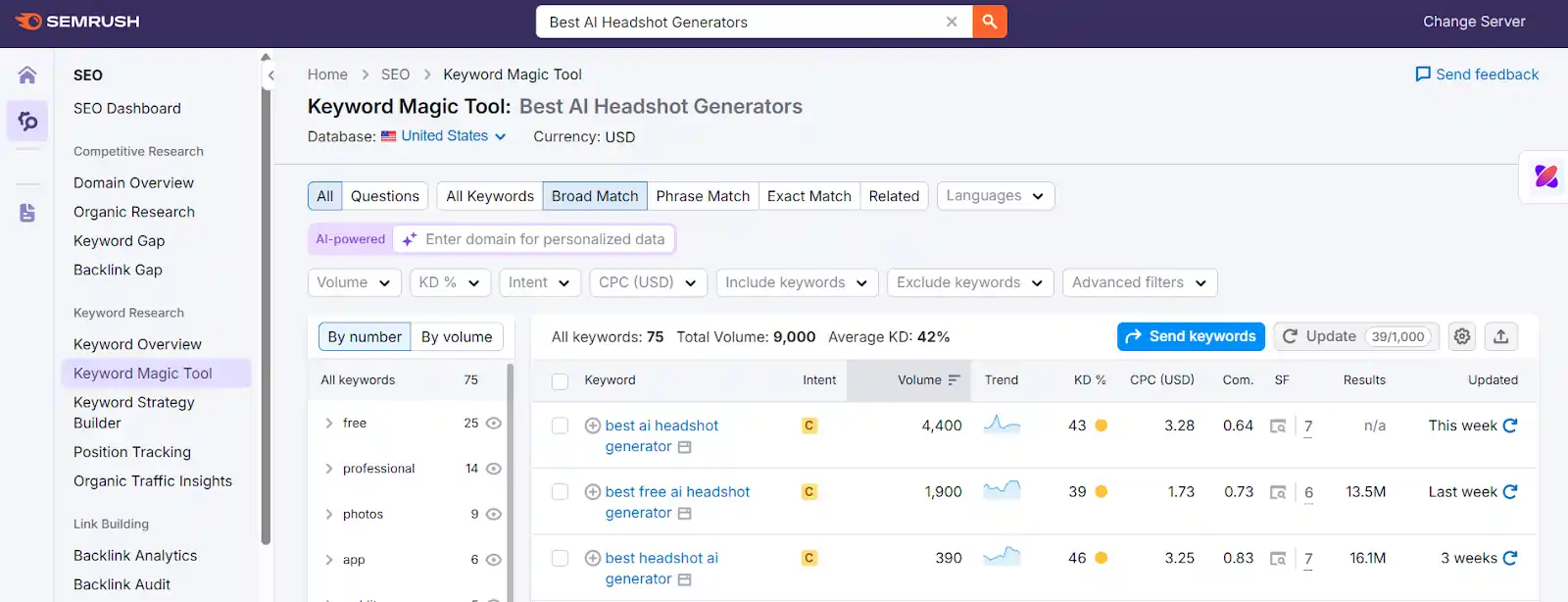
At Affdude, we use Semrush daily for keyword gap analysis, tracking how our content performs in both traditional and AI search. Keyword Magic Tool helps find terms with lower personal keyword difficulty (PKD%), which means faster rankings for newer affiliate sites.
Semrush also offers an AI Article Generator and SEO Brief Generator. Both are handy for creating SEO-optimised affiliate content at scale. You can even publish directly to WordPress from within the platform. For affiliates managing multiple sites, that saves hours every week.

SEMrush AI Visibility Secrets Affiliates Must Use
Grab SEMrush Discount 17% Off to unlock AI visibility tracking, keyword gaps, competitor insights, and faster rankings.
5. Create Content That AI Cannot Fully Replicate
AI summaries work well for factual, straightforward answers. But they struggle with:
When we write reviews at Affdude, we always include first-hand testing data. AI cannot replicate that. Readers and AI engines value original research more than rehashed information from other sites. Original content also earns more backlinks naturally.
6. Diversify Traffic Sources Beyond Google Search
Relying 100% on Google organic traffic is risky. Smart affiliates now build multiple traffic acquisition channels:
At Affdude, building our YouTube channel and email list has been a game-changer. When Google shifts algorithms or AI Overviews take more clicks, alternative traffic sources keep revenue stable. Own your audience instead of renting it from Google.
Tracking Success: Metrics That Matter in a Zero-Click World 📊
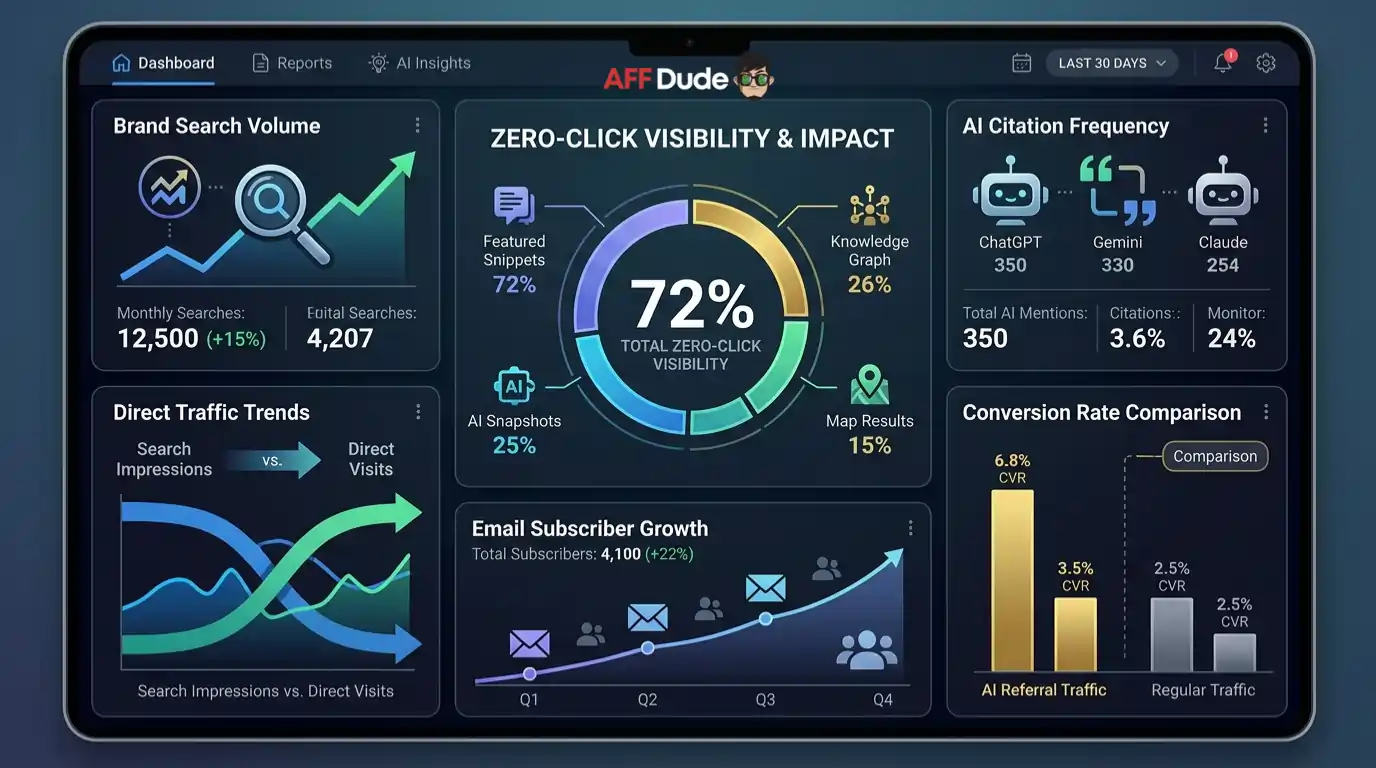
Old metrics like page views and organic clicks do not tell the full story anymore. Here are the numbers affiliates should track:
Create a zero-click impact dashboard. Compare Search Console impressions with direct traffic in Google Analytics. A strong correlation means users see you in search results and visit directly later. Semrush makes it easy to set up these comparisons with built-in reporting tools.
What Affdude Recommends for Affiliate Marketers Going Forward
We have spent months testing and tracking AI search optimisation strategies for affiliate sites. Here is what works based on our experience:
Invest time in Semrush. Use it for finding low-competition affiliate keywords. Track AI visibility with the new toolkit. Run site audits to ensure AI bots can crawl your pages without issues.
Build content that AI wants to cite. Original data, hands-on reviews, and structured answers win in AI search. Focus on high-converting commercial keywords that still generate clicks and commissions.
Most importantly, stop thinking about SEO as just ranking on page one. In 2026, SEO for affiliates means being the source that AI trusts, cites, and recommends. Build that trust through genuine expertise, original content, and consistent multi-platform presence.
Zero-click searches are not going away. But affiliates who adapt will not just survive. They will earn more from less traffic because visitors coming through AI search are more targeted and ready to convert. Start making changes today, and you will be ahead of most competitors who are still playing the old SEO game.
Recommended Articles
Affiliate Disclosure: This post may contain some affiliate links, which means we may receive a commission if you purchase something that we recommend at no additional cost for you (none whatsoever!)