
Finding a reliable partner in the arbitrage space is often harder than running the campaigns themselves. You spend weeks optimizing traffic sources, only to encounter opaque revenue shares, sudden payment holds, or strict approval processes that reject your landing pages without explanation.
Sustainable profitability requires more than just volume; it demands a partner that offers stable feeds, transparent reporting, and competitive revenue splits for your specific traffic type.
This guide cuts through the noise to compare the 8 top search feed monetization ad networks. We break down approval requirements, payment terms, and feed types to help you choose the right platform for your scale.
What Is Search Feed Monetization in Traffic Arbitrage?

Search feed monetization is the engine that powers the “buy low, sell high” arbitrage model. At its core, this strategy involves purchasing affordable traffic from sources like social media or native networks and redirecting it to a search results page (SERP) monetized by major providers like Google, Bing, or Yahoo.
When a user clicks an ad on this results page, you earn a share of the revenue, known as Revenue Per Click (RPC). The goal is to ensure your RPC exceeds your initial Cost Per Click (CPC).
Key components of this model include:
Unlike traditional affiliate marketing, you aren't selling a product. Instead, you are effectively acting as a high-quality traffic broker for search engines. Success relies on targeting high-intent keywords—such as “insurance quotes” or “online degrees”—where advertisers bid aggressively for every click.
Search Feed Monetization Ad Networks Every Arbitrage Marketer Should Know
| Search Feed Monetization Ad Networks | Model(s) Supported | Best Use Case / Strength |
|---|---|---|
| Ads.com | RSOC, AFD | Flexible platform, growing arbitrage support |
| System1 | RSOC | Large scale, data-driven arbitrage |
| ExplorAds | AFD | Reliable, stable feed access |
| Ezoic | Contextual, RSOC | Entry-level with automated site optimization |
| Media.net | Contextual, RSOC | Content integration, high relevancy |
| Google AdSense | AFD, RSOC, CSA | High inventory, strict compliance |
| Taboola | Native Ads (traffic source) | Premium native traffic for acquisition |
| MGID | Native Ads (traffic source) | Global native reach for traffic diversification |
1. Ads.com

Ads.com is a premium destination for professional arbitrageurs seeking direct search feed monetization ad networks for arbitrage without aggressive intermediaries. By cutting out the middleman, this platform allows media buyers to access higher revenue shares and exclusive feed types that are often restricted on smaller networks.
The platform specialises in creating a seamless bridge between your paid traffic and top-tier search engine results pages. With robust support for both domain parking and active search arbitrage, Ads.com provides the granular data transparency needed to optimise your Return on Ad Spend (ROAS).
Ads.com Key Features
Publishers with 500K+ monthly visits seeking enterprise-level monetisation with strict compliance frameworks.
2. System1

Coming in at the #2 position, System1 operates RAMP (Responsive Acquisition Marketing Platform), a powerful data-driven search feed solution designed specifically for experienced media buyers running native-to-search arbitrage campaigns.
Using advanced machine-learning algorithms, RAMP continuously optimizes query matching, ad relevance, and revenue per click across multiple high-performing verticals, making it a top-tier choice for scalable performance marketing.
Approval requires proven ad spend history (typically $5,000–$10,000 monthly), registered business entities, and traffic quality metrics demonstrating genuine user intent. System1 prioritises partners delivering click-through rates above 2% and time-on-page exceeding 30 seconds.
System1Key Features
Experienced media buyers with proven spend history seeking scalable arbitrage opportunities and data transparency.
3. Explorads

Explorads.media has emerged as a flexible and accessible option among the top search feed monetization ad networks for arbitrage. This network is particularly valuable for its diverse ad formats, including XML feeds and pop-under solutions that cater to a wide range of traffic types.
The platform creates a user-friendly environment for media buyers who need versatile integration options for their specific campaign funnels. By offering direct XML feed integration, Explorads allows for precise control over how search results are displayed to your audience.
Explorads Key Features
Mid-sized publishers testing search arbitrage models with mixed-geography traffic and moderate budgets.
4. Ezoic
Ezoic operates an AI-driven monetisation platform that includes search feed integration alongside display, video, and native inventory. The system automatically tests search feed placements against traditional formats to identify optimal revenue configurations for your audience.
Publishers benefit from Ezoic's mediation layer, which compares search feed performance against AdSense, Media.net, and premium exchanges in real time. The platform requires 10,000+ monthly visits and emphasises user experience metrics alongside revenue optimisation.
Ezoic Key Features
Content publishers seeking automated optimisation without manual feed management or technical complexity.
5. Media.net
Media.net delivers contextual search advertising powered by the Yahoo Bing Network, focusing on keyword-level relevance and content alignment. The platform suits publishers preferring contextual matching over pure search arbitrage models.
Approval requires quality content, organic traffic sources, and compliance with contextual advertising guidelines. Media.net excels in tier-one geographies (US, UK, Canada) where Yahoo Bing search demand remains competitive with Google.
Media.net Key Features
Content-focused publishers with tier-one traffic seeking contextual search monetisation over direct arbitrage.
6. Google AdSense

Securing the #6 position in our list of Search Feed Monetization Ad Networks, Google AdSense enables publishers to monetize site-specific search functionality by displaying sponsored results alongside organic listings. Unlike pure arbitrage-based models, this approach relies on genuine user search intent within your website’s ecosystem.
The network suits content sites with established search features where users actively query internal content. Google's strict policies prohibit incentivised searches, artificial query generation, and misleading implementation methods.
Google AdSense Key Features
Established content sites with legitimate internal search functionality and strong Google AdSense compliance history.
7. Taboola
Taboola functions primarily as a native advertising platform but supports search feed monetisation for publishers combining content recommendation with search arbitrage strategies. The network requires premium traffic quality and editorial-style site designs.
Approval standards prioritise large publishers with tier-one audiences and polished presentations. Taboola's search feed option works best when integrated with content discovery flows rather than standalone arbitrage pages.
Taboola Key Features
High-traffic editorial sites combining content discovery with complementary search monetisation strategies.
8. MGID

Rounding out our list of Search Feed Monetization Ad Networks, MGID delivers a robust native advertising infrastructure with search feed capabilities tailored for publishers managing diverse traffic sources across multiple geographies.
Notably, the platform is highly accessible, accepting international traffic and mid-tier regions that are often excluded by more restrictive premium providers—making it a strong option for global-scale monetization.
High fill rates and flexible compliance frameworks make MGID suitable for testing search arbitrage in markets where Google or Taboola struggle. Payment terms include Net 30 with multiple withdrawal methods supporting global publishers.
MGID Key Features
Publishers monetising international or tier-two traffic seeking high fill rates and flexible approval standards.
Critical Metrics for Tracking Search Feed Monetization Success
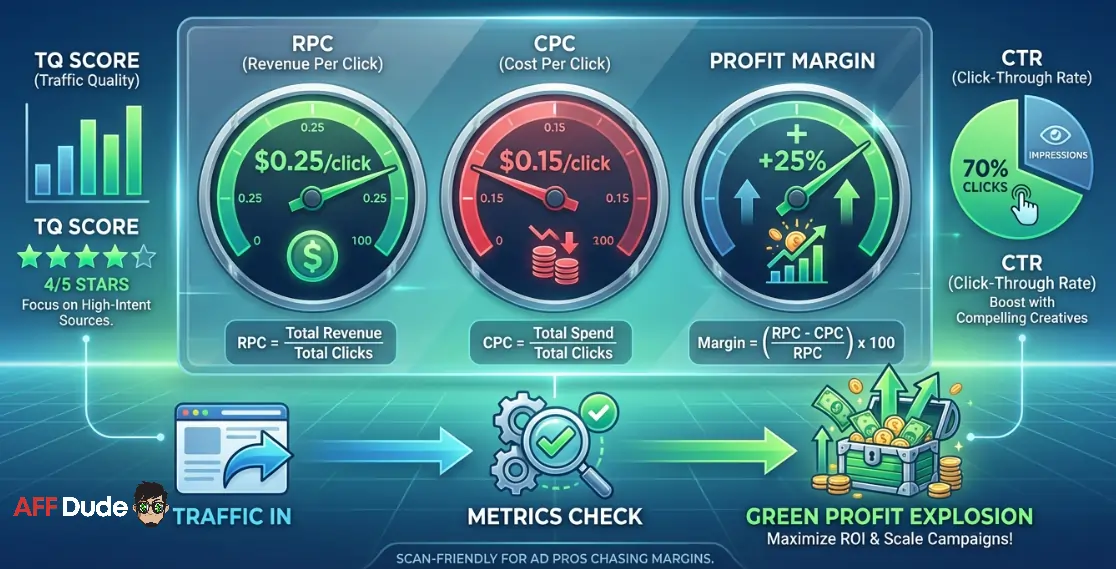
Tracking the right performance indicators separates profitable arbitrageurs from those burning cash. Search feed campaigns demand precise monitoring because even small metric shifts can eliminate your profit margins overnight.
Maintaining positive arbitrage requires your RPC to consistently exceed CPC by at least 20-30% to cover operational costs.
FAQs About Search Feed Monetization Ad Networks
What is the difference between RSOC and AFD feeds?
RSOC (Related Search on Content) displays ads based on page intent, while AFD (AdSense for Domains) is strictly for parked domains without content. RSOC typically yields higher RPCs.
How does “1-click” vs. “2-click” flow affect TQ scores?
A 2-click flow (landing page -> search page) filters accidental clicks, significantly improving Traffic Quality (TQ) scores and unlocking higher advertiser bid caps compared to direct linking.
What is the minimum TQ score required for premium feeds?
Most premium networks like System1 or Tonic require a TQ score above 50-60. Consistently dropping below this threshold risks feed suspension or smart-pricing penalties.
Can I use XML feeds for social-to-Search Arbitrage?
Yes, XML feeds offer raw data access, allowing you to build custom, compliant pre-landers that load faster and convert better than standard hosted search pages.
What is “Arbitrage Margin” in search Feed Monetization?
It is the delta between your traffic acquisition cost (CPC) and the revenue generated per visitor (RPC/RPU). A healthy margin for scale is typically 20-30%.
Do Search Feed Ad Networks support server-to-server (S2S) tracking?
Yes, most advanced networks provide S2S postbacks. This allows you to pass click IDs and revenue data back to your tracker for real-time campaign optimization.
Why are “tier-1” countries preferred for Search Arbitrage?
Advertisers in Tier-1 geos (US, UK, CA) bid significantly higher for search terms, often paying $1.00+ per click, whereas Tier-3 clicks may earn less than $0.05.
Your Next Step in Search Feed Monetization Arbitrage
Success in search feed arbitrage isn't just about picking a network; it's about aligning the right traffic source with a provider that rewards your specific user intent.
If you leverage premium RSOC technology or flexible XML integrations, your profitability hinges on constant testing and optimising your Revenue Per Click.
Start by diversifying with two or three of these trusted partners to protect your cash flow, then scale the one that consistently delivers the highest margins for your campaigns.
Recommended Articles