
Ad budgets are shifting fast. Brands that once relied entirely on Google and Meta are now staring at a growing list of retailer-owned ad platforms—each with different data, reach, and pricing models. Figuring out where your dollars actually work is harder than it sounds.
Below, you'll find a breakdown of 5 retail media networks worth paying attention to right now—what each one offers, where they fall short, and which types of advertisers they suit best. CPG marketers and DTC brands exploring new channels will walk away with a sharper sense of where to place their next bet.
Why Retail Media Networks Are the New Programmatic Standard
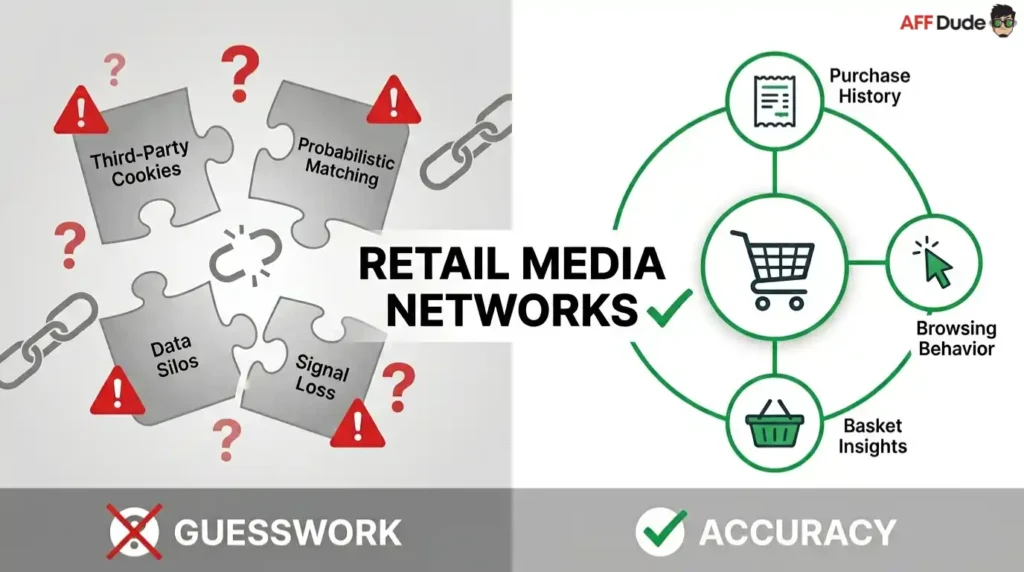
For years, programmatic advertising leaned on third-party cookies and probabilistic audience matching. That model is breaking down. Privacy regulations tightened, signal loss increased, and advertisers started demanding clearer proof of return.
Retail media networks filled that gap. They sit on deterministic first-party data—real purchase histories, real browsing behavior, real basket-level insights. That means brands can target shoppers based on what they've actually bought, not what a pixel suggests they might want.
The closed-loop measurement model changes everything. An ad impression connects directly to a transaction within the same ecosystem, removing the guesswork that plagued open-web programmatic for over a decade.
This shift isn't a trend—it's a structural correction in how digital advertising allocates spend.
Retail Media Networks Transforming Advertising
| Top Retail Media Networks | Primary Strength | Ideal Advertiser |
|---|---|---|
| Amazon Ads | Massive search volume | Endemic sellers |
| Walmart Connect | Online + In-store data | CPG brands |
| eBay Ads | High purchase intent | Resellers & niche |
| Pacvue | Unified management | Enterprise teams |
| Criteo | Open web reach | Fashion & electronics |
1. Amazon Ads
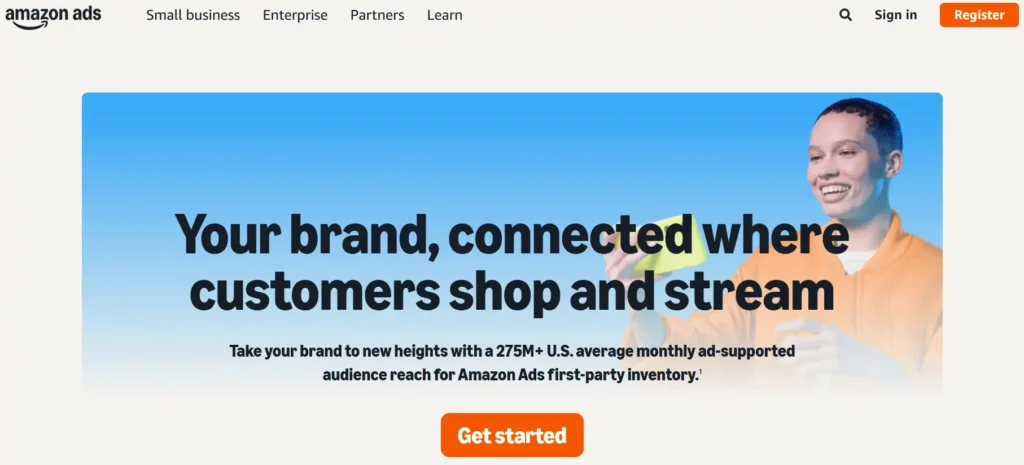
Amazon remains the dominant force in retail media, capturing over 75% of the market share due to its sheer volume of transaction-ready traffic.
For brands, it offers an unmatched “flywheel” effect: paid ad performance directly boosts organic search visibility, creating a cycle of growth that is hard to replicate elsewhere.
Its native demand-side platform (Amazon DSP) allows advertisers to target shoppers both on and off Amazon using authenticated purchase data.
This means you can retarget a user who viewed your coffee maker on Amazon while they are streaming a movie on Prime Video or browsing a third-party site, ensuring your ad spend follows high-intent users across the web.
Best for: Endemic brands (sellers) needing immediate sales velocity and non-endemic brands leveraging massive first-party data.
2. Walmart Connect
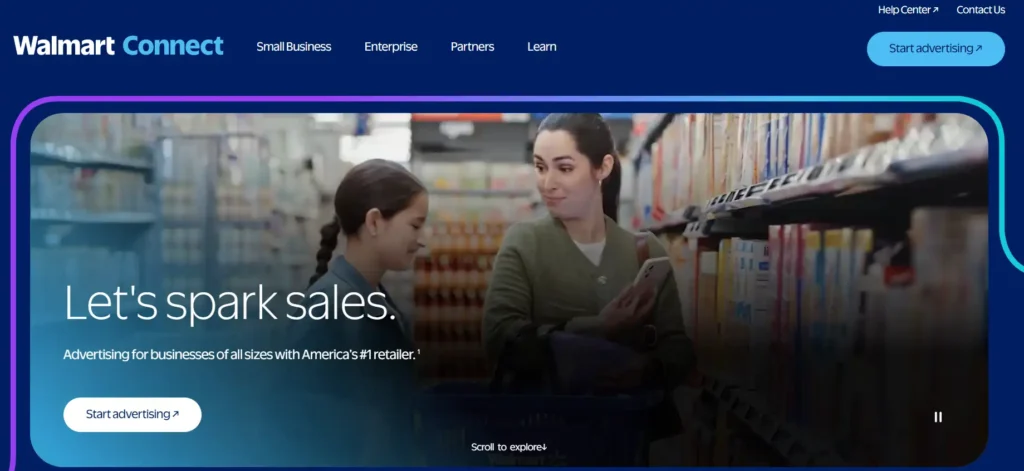
Walmart Connect differentiates itself by bridging the gap between digital clicks and physical store sales. Unlike digital-only platforms, Walmart use data from over 4,700 physical stores, allowing advertisers to target customers based on their in-store buying habits—a massive advantage for CPG brands whose volume primarily moves offline.
The platform creates a less saturated environment compared to Amazon, often resulting in more efficient bid prices.
By integrating with The Trade Desk, Walmart Connect also offers sophisticated off-site programmatic targeting, enabling brands to reach Walmart shoppers on premium CTV and video inventory with greater transparency than many “walled garden” alternatives.
Best for: CPG and household brands looking to drive both e-commerce and brick-and-mortar sales volume.
3. eBay Ads
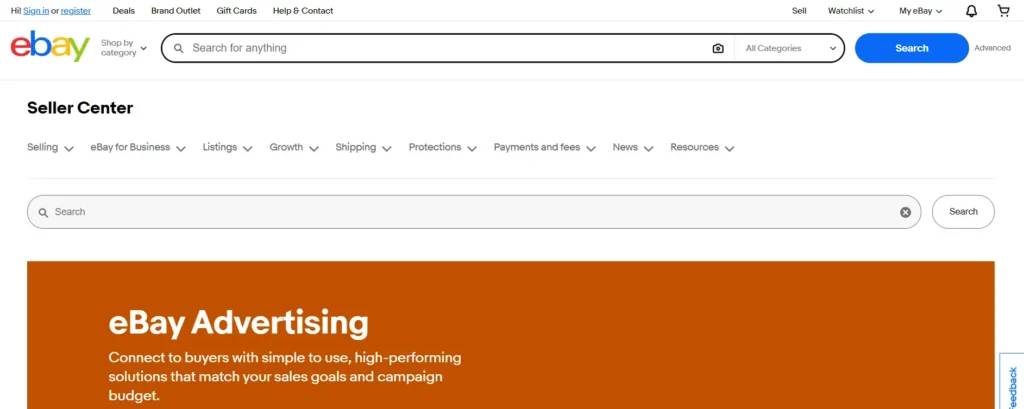
eBay Ads serves a unique role for sellers of refurbished, collectible, and automotive parts inventory that often struggles on standard retail networks.
Its primary tool, “Promoted Listings,” operates on a cost-per-sale model rather than just clicks, significantly reducing the risk for advertisers by ensuring fees are only incurred when a transaction actually happens.
This network is less about mass-market CPG saturation and more about connecting specific items with enthusiasts and value-hunters. The platform’s “Halo Effect” means that promoting one listing can often boost visibility for other items in your store, providing organic lift without additional direct spend.
Best for: Resellers, automotive parts dealers, and niche category sellers focused on profitability over reach.
4. Pacvue

Pacvue is not a retailer itself but a powerful third-party software that unifies fragmented retail networks into a single dashboard. For agencies and enterprise brands managing ads across Amazon, Walmart, Target, and Instacart simultaneously, Pacvue eliminates the chaos of logging into multiple portals.
It offers advanced automation features that native consoles lack, such as day-parting (scheduling ads for specific hours) and inventory-aware bidding (pausing ads when stock is low).
This level of control allows operational teams to execute complex, rule-based strategies that protect margins and maximize ROAS across diverse channels.
Best for: Enterprise brands and agencies executing complex, multi-retailer campaigns requiring automation.
5. Criteo Commerce Max
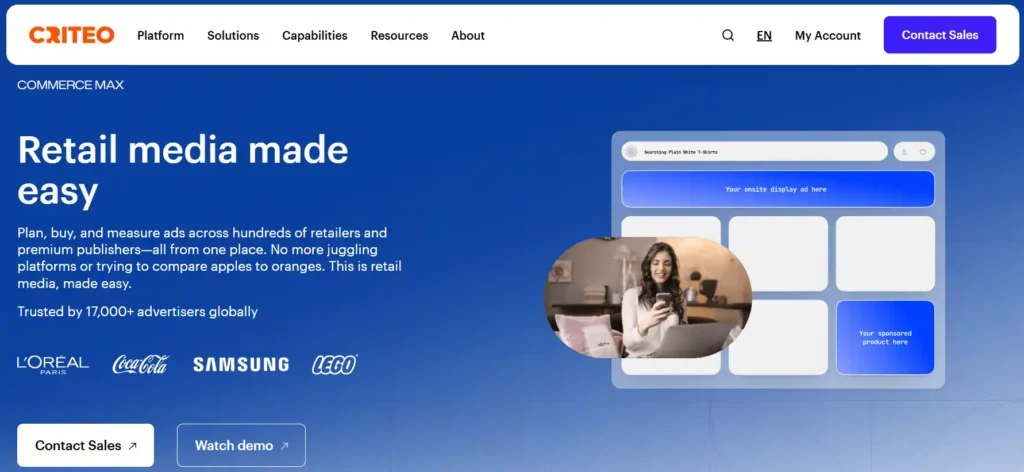
Criteo Commerce Max unlocks the “open web” of retail media, giving brands access to inventory across hundreds of retailers like Best Buy, Macy's, and Costco that don't have their own standalone DSPs.
It democratizes access to retail data, allowing advertisers to run on-site sponsored products across a vast network of partner retailer sites through one entry point.
This platform is crucial for brands that want to diversify away from the Amazon/Walmart duopoly. By aggregating audiences from multiple mid-tier retailers, Criteo allows for scale that rivals the giants while often providing unique, high-intent audiences specific to categories like electronics or fashion.
Best for: Brands seeking scale across specific vertical retailers (e.g., fashion, electronics) without managing individual relationships.
How to Integrate Retail Media Networks into Your DSP

Running campaigns across multiple retail media networks without a centralized system creates inefficiency fast. Fragmented dashboards, inconsistent reporting, and duplicated audiences drain both time and budget.
Connecting retail media networks directly into your demand-side platform solves this. It consolidates buying, bidding, and measurement under one roof.
Key integration steps to prioritize:
Getting this infrastructure right early prevents costly rework once ad spend scales across three or more networks.
Maximizing ROI with Retail Media Networks
Retail media can feel messy at first because every platform measures performance a little differently, and the learning curve is real. The clearer path is to focus on what you actually need: strong shopper intent, reliable reporting, and a workflow your team can maintain week after week.
If you treat Retail Media Networks as a portfolio instead of a single bet, it gets easier to compare results fairly and spot what’s worth scaling. Start with one or two campaigns, keep your tracking disciplined, and let the data earn your confidence.
Recommended Articles