
Search habits in finance are changing fast. Google’s AI Overviews now appear in roughly 16% of financial queries and dominate almost 90% of “how-to” searches.
For forex affiliate rankings, these numbers represent a massive shift. Old tactics like keyword stuffing or buying cheap links no longer guarantee visibility in competitive finance niches.
To succeed now, your site must provide immediate, high-quality answers that AI can verify and cite. Statistics show that 85% of AI citations come from content published within the last two years. If your reviews or guides are older, you are likely invisible to the algorithms.
Getting cited in an AI snapshot puts your brand at the very top of the results page. It signals massive trust. To achieve EEAT for finance content (YMYL) authority, you must adapt.
The goal is simple: structure data so machines understand it, and write with enough value that humans click through.
How AI Overviews Define Forex Affiliate Rankings
Traders today want speed. They do not want to scroll past five ads and three generic paragraphs to find a minimum deposit amount. AI Overviews satisfy this need by aggregating data into a single snapshot.
When your content powers that snapshot, you win. It positions you as a leading Introducing Broker (IB) resource instantly. Unlike traditional rankings where users might skip the first result, an AI citation implies the search engine has vetted your answer.
Competition for “best forex broker” is impossible for most sites. However, Google AI Overviews SEO allows you to capture traffic from specific conversational queries. Questions like “How do I set up a trailing stop on MT5 with low latency?” are gold mines.
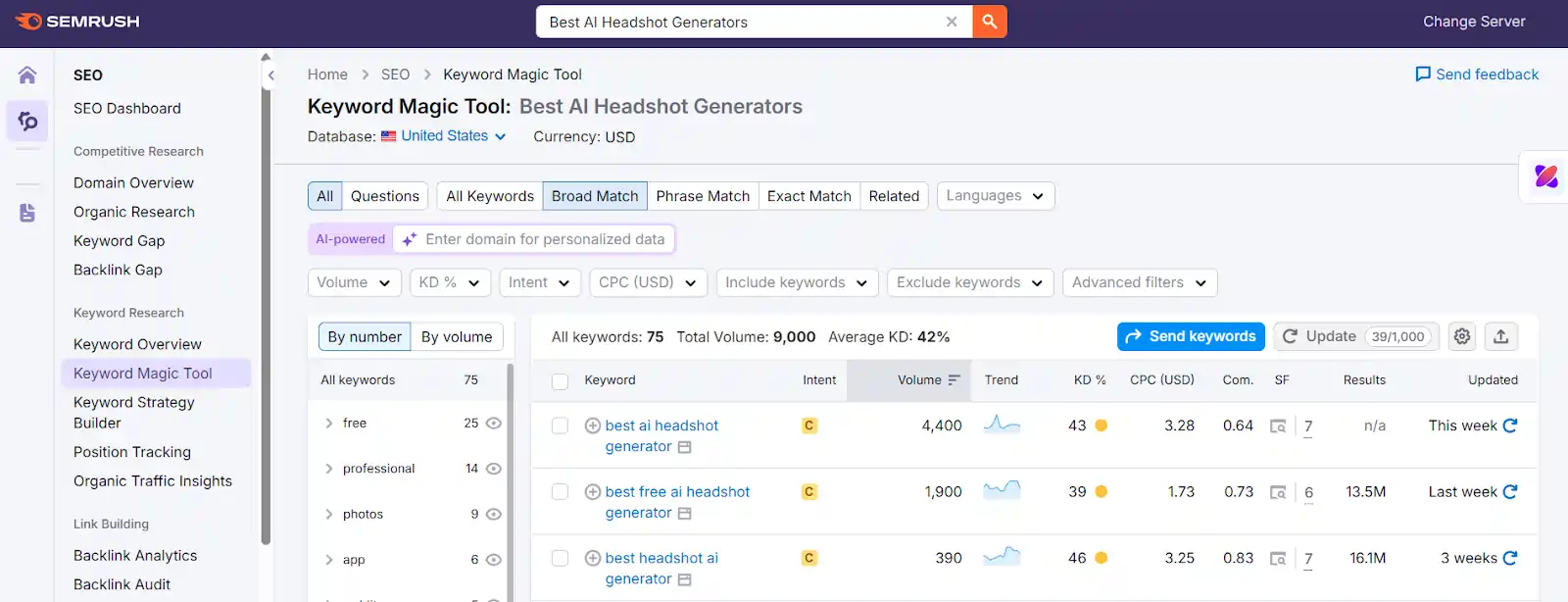
Tools like Semrush are vital here. You can use their ‘Keyword Magic Tool’ to identify question-based keywords that trigger these AI results. By targeting these long-tail informational keywords, you bypass the giants and connect directly with traders ready to act.
MetaTrader 4 and 5: Capitalizing on Technical Intent
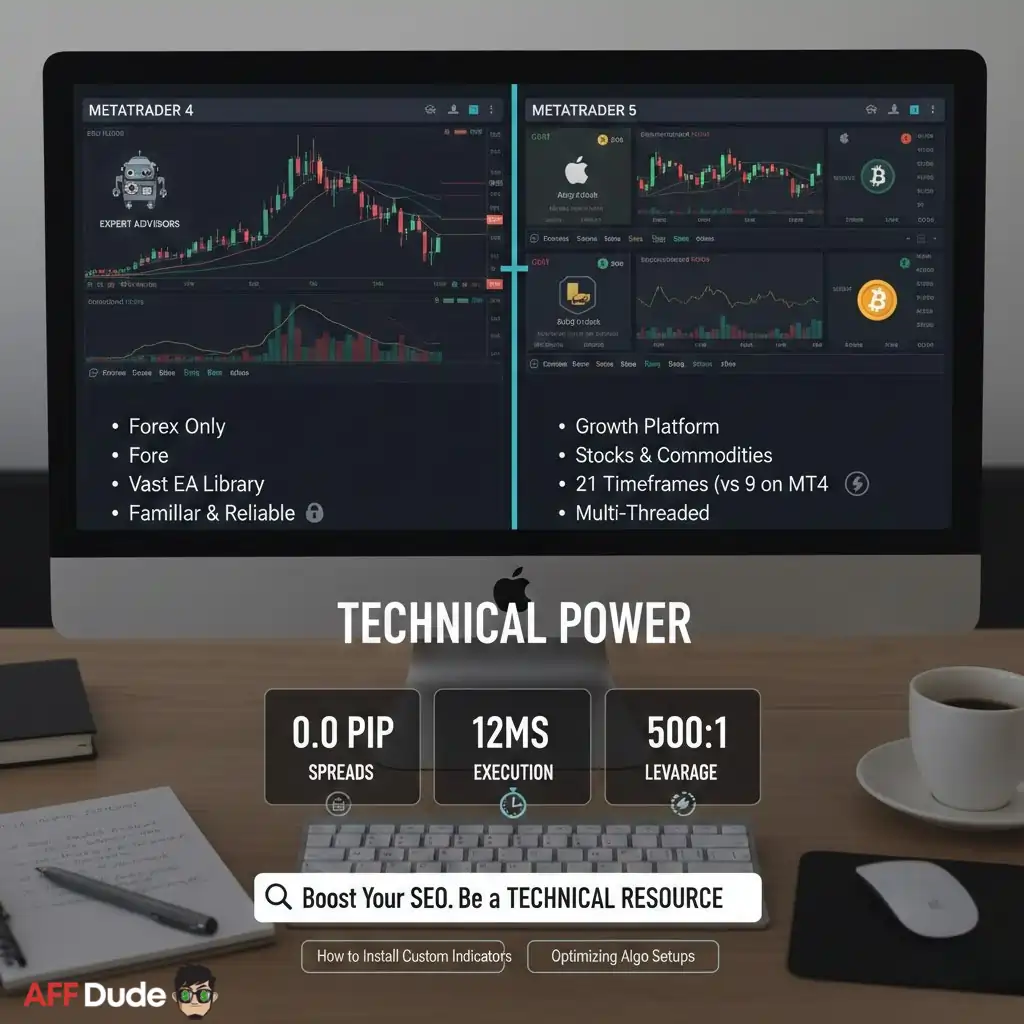
Your content needs a technical backbone. MetaTrader 4 and 5 (MT4/MT5) remain the industry standards. MT4 holds loyalty among forex-only traders because of its vast library of Expert Advisors. It is familiar and reliable.
MT5, however, is where the growth lies. It supports multi-threaded architecture, stocks, and commodities. It offers 21 timeframes against MT4’s 9.
AI algorithms favor content that provides hard technical specs about these platforms. Vague descriptions do not work. You need to provide verifiable data points.
Specific metrics to include:
By publishing these exact figures, you feed the AI the data it needs to construct a comparison. This boosts your Entity-Based SEO signals. It proves your site is a technical resource, not just a marketing blog.
Create guides on specific tasks. Explain “how to install custom indicators on MT5” or “optimizing algorithmic setups.” These topics have high utility. They attract users who are already trading and looking for better tools—exactly the audience you want.
Formatting for Machine Retrieval (AEO)
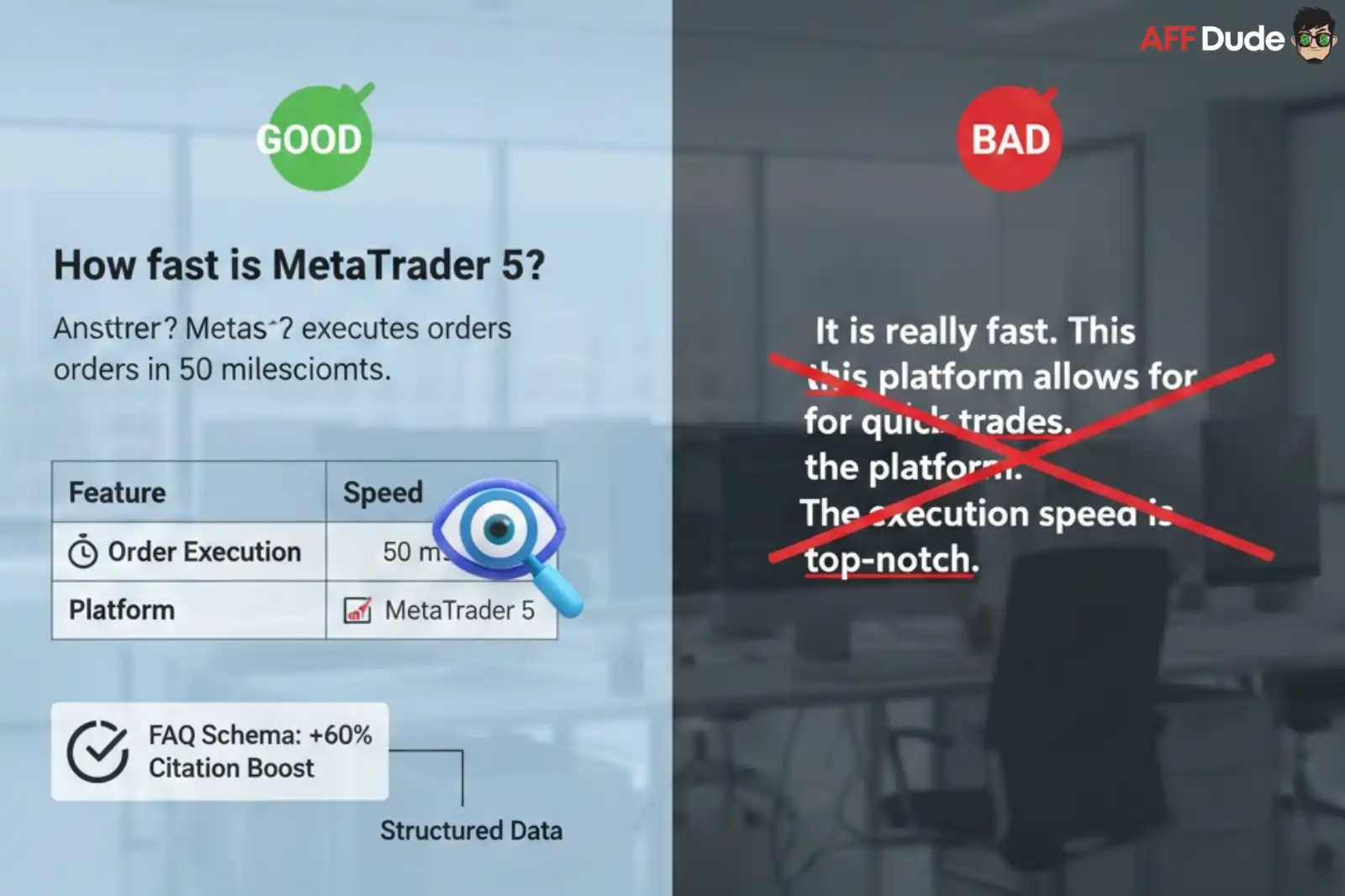
Writing for AI requires a rigid structure. This is often called AI search optimisation (AEO). The algorithm is not a human reader; it extracts relationships between words.
Clarity is your best tool. Avoid pronouns like “it” or “that” in complex sentences. Use the proper noun. instead of saying “It executes faster,” say “MetaTrader 5 executes orders faster.”
Structural rules for AI visibility:
Using FAQ schema is also non-negotiable. It increases citation chances by nearly 60%. Structured data marks up your content so Google understands exactly what part of the page is the question and what part is the answer.
Building a Value-First Affiliate Business
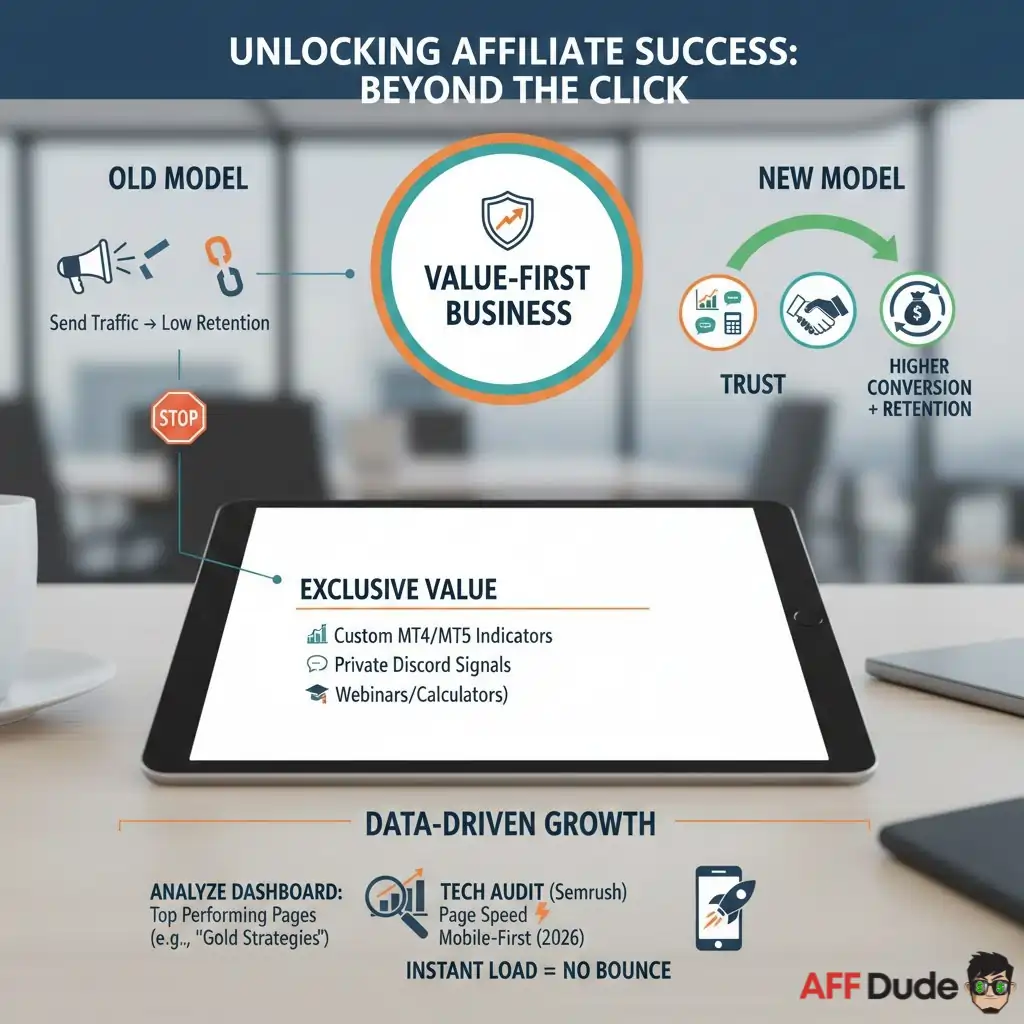
Sending traffic to a broker is only step one. A profitable business relies on retention. You earn more when clients keep trading.
To keep traders attached to your partner link, you must offer exclusive value. Why should they sign up through you?
Offer these incentives:
This approach changes your role. You become a consultant, not just a salesperson. This builds trust. Trust increases conversion rates.
Data should drive these decisions. Check your broker’s affiliate dashboard. Which pages bring in active traders? If you see that “Gold Trading Strategies” brings in more deposits than “Broker Reviews,” shift your focus.
Use Semrush to audit your site for technical issues. With mobile usage projected to dominate by 2026, page speed is a ranking factor. A slow site will not make it into an AI snapshot. Ensure your landing pages load instantly to prevent bounce backs.
Strategy Comparison: Old SEO vs. AI Optimization
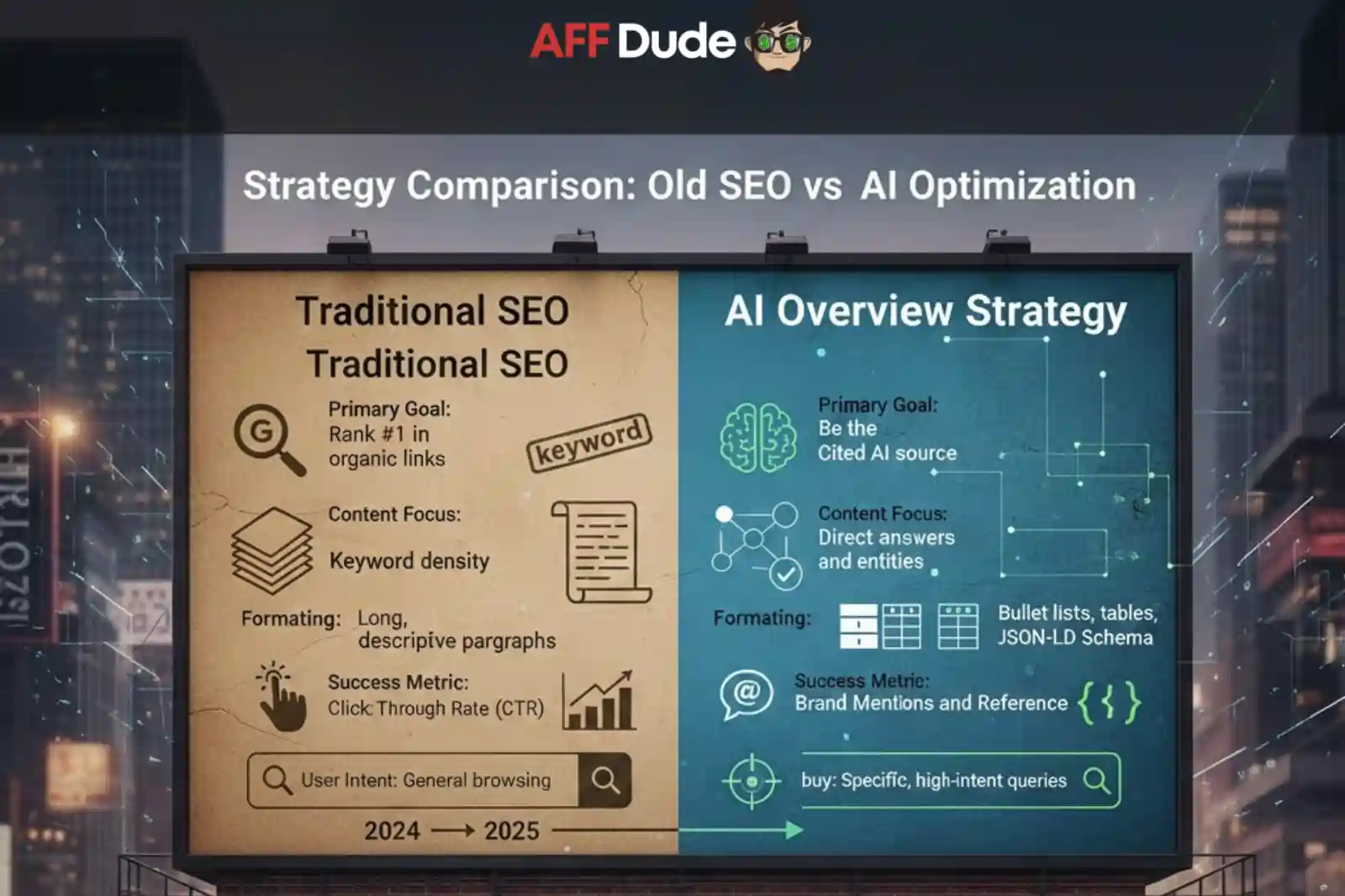
Understanding the difference between traditional ranking and AI optimization is key to your 2026 roadmap.
| Feature | Traditional SEO | AI Overview Strategy |
|---|---|---|
| Primary Goal | Rank #1 in organic links | Be the Cited AI source |
| Content Focus | Keyword density | Direct answers and entities |
| Formatting | Long, descriptive paragraphs | Bullet lists, tables, JSON-LD Schema |
| Success Metric | Click-Through Rate (CTR) | Brand Mentions and Reference |
| User Intent | General browsing | Specific, high-intent queries |
Conclusion
Search results are different now. This shift offers a massive advantage to affiliates willing to adapt. By mastering Google AI Overviews SEO and focusing on clear, technical data, you can outpace larger competitors who are slow to change.
Your content is your asset. It drives your CPA and Revenue Share wealth. Clarity cuts through the noise.
When you optimise content for AI Overviews, you serve both the machine and the trader. You provide the exact answer needed at the exact moment of intent.
Target those conversational queries. Use tools like Semrush to find the gaps. Build a site that functions as a technical resource. This path leads to a sustainable, high-authority affiliate business in 2026.
Recommended Articles

Affiliate Disclosure: This post may contain some affiliate links, which means we may receive a commission if you purchase something that we recommend at no additional cost for you (none whatsoever!)