

Digital ad spend just crossed $1 trillion, but most e-commerce stores are bleeding money on the wrong platforms. The problem? Choosing ad networks for e-commerce and retail websites without understanding what actually converts browsers into buyers.
After burning through seven-figure ad budgets and testing every major advertising network, I've cracked the code on which platforms deliver real ROI for online stores. Most retail media advertising strategies fail because they chase traffic instead of targeting shoppers ready to purchase.
This guide reveals the ad networks that are crushing it for e-commerce right now—no fluff, no outdated tactics, just platforms with proven conversion tracking, dynamic product ads, and retail-specific targeting that turn ad spend into profit.
📦 Why Ad Networks for E-commerce and Retail Websites Are Essential for Growth?
Organic reach is no longer sufficient for sustainable growth in the modern retail landscape. With global retail e-commerce sales projected to exceed $4.8 trillion in 2025, competition for consumer attention is fierce.
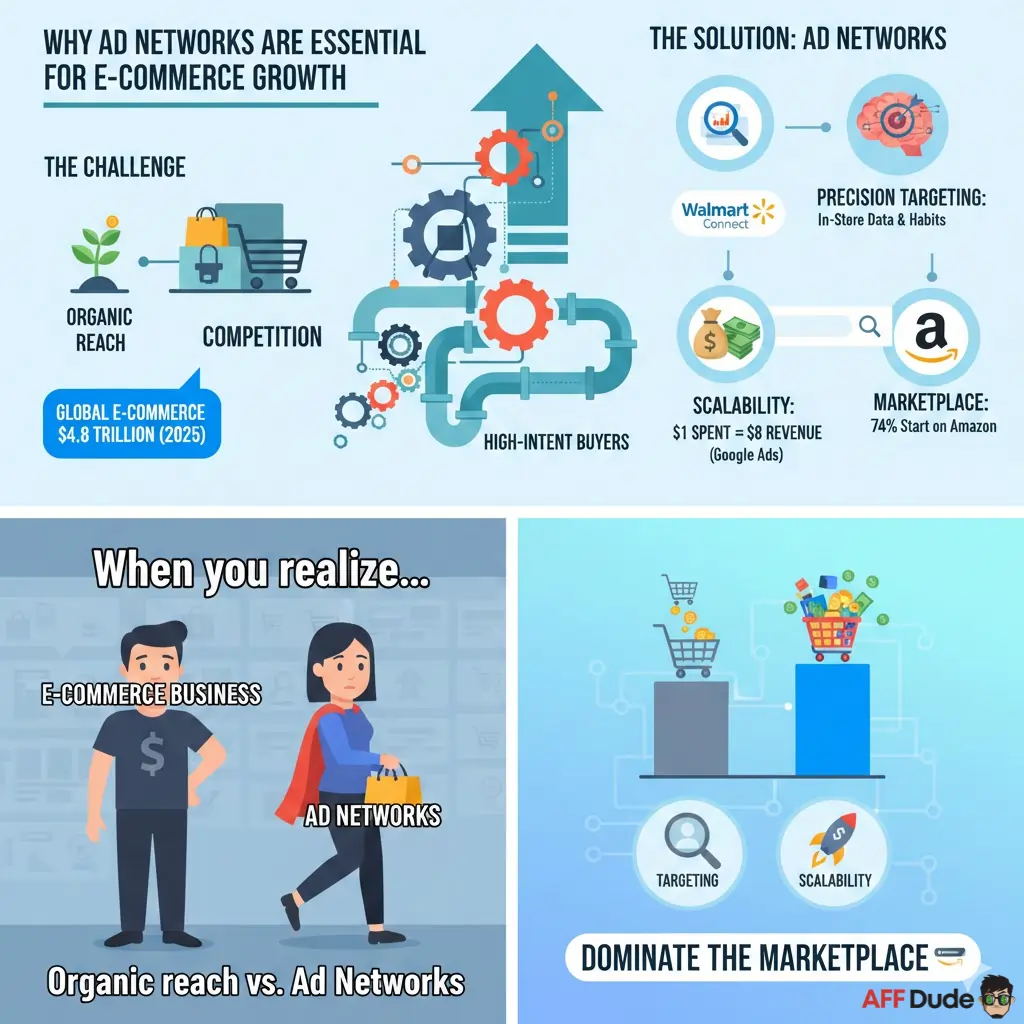
Specialized retail media networks are essential because they leverage first-party data to place your product directly in front of high-intent buyers during the shopping journey, bypassing the “awareness” phase entirely.
Trusted Advertising Platforms for E-commerce and Retail Brands
| Best Ecommerce Ad Networks | Best For | Average ROI/Performance |
|---|---|---|
| Google Ads | Search intent & Shopping | 200% ROI, 6.96% CVR |
| Meta Ads (Facebook & Instagram) | Social commerce & retargeting | 8.95% CVR, 10.2% retail CVR |
| Amazon Advertising | Product discovery | $56.2B revenue, 67% market share |
| TikTok Ads | Viral product marketing | 5.17% CVR, 46% ROAS increase |
| Pinterest Ads | Visual discovery | 3x higher conversion lift |
| Snapchat Ads | Gen Z & Millennials | AR-driven engagement |
| Microsoft Advertising | B2B & older demographics | Lower CPC, quality traffic |
| Criteo | Dynamic retargeting | AI-powered personalisation |
| AdRoll | Cross-channel retargeting | Managed services included |
| Walmart Connect | In-store & online reach | $4.4B revenue, 31% YoY growth |
1. Google Ads
Google Ads remains the undisputed leader among ad networks for e-commerce and retail websites, generating $224 billion in revenue for 2024 through its digital advertising ecosystem. With an average 200% ROI and 6.96% conversion rate, Google's Shopping campaigns and Performance Max deliver unmatched search intent targeting through advanced ad formats.
I've consistently seen Google Shopping ads achieve 1.91% conversion rates whilst maintaining affordable CPCs averaging $0.62. The platform's machine learning optimises bids in real-time across Search, Display (via Google Display Network), YouTube video ads, and Gmail, maximising your reach to ready-to-buy shoppers through multi-channel advertising.
Key Features and Opportunities:
⭐ Why Choose Google Ads?
Google Ads dominates ad networks for e-commerce and retail websites by connecting brands with shoppers actively searching for products, delivering measurable ROAS through intent-driven advertising at scale with superior targeting capabilities.
2. Meta Ads (Facebook & Instagram)

Meta's advertising ecosystem delivers exceptional performance for e-commerce brands through sophisticated ad formats, with retail and e-commerce leading all sectors at 10.2% conversion rates. Facebook's 8.95% average CVR combined with Instagram's visual commerce capabilities creates powerful opportunities for product discovery and social selling across the digital advertising channel.
With 83% of savvy marketers using Facebook and 78% leveraging Instagram, Meta Ads provides unparalleled audience reach exceeding 3 billion monthly active users. The platform's dynamic product ads and Advantage+ Shopping campaigns use AI to automatically show relevant products to high-intent shoppers through demographic targeting and interest categories.
Key Features and Opportunities:
⭐ Why Choose Meta Ads?
Meta Ads excels among ad networks for e-commerce and retail websites through sophisticated audience targeting, native shopping experiences, and conversion-optimised ad placement that transform social engagement into sales whilst building brand awareness.
3. Amazon Advertising
Amazon Advertising has become indispensable for e-commerce success, commanding 67% of the U.S. retail media market with $56.2 billion in 2024 revenue through its retail media platform. Shoppers on Amazon arrive with purchase intent, making it one of the highest-converting ad networks for e-commerce and retail websites leveraging closed-loop attribution.
I've witnessed brand partners achieve 3-5x ROAS on Amazon Sponsored Products by targeting high-intent keywords at the exact moment shoppers are comparing products. The platform's closed-loop attribution tracks sales directly through first-party data, providing transparent performance metrics you can action immediately.
Key Features and Opportunities:
⭐ Why Choose Amazon Advertising?
Amazon Advertising dominates ad networks for e-commerce and retail websites by placing products before shoppers with verified purchase intent, delivering measurable sales lift through unmatched marketplace reach and retail media spend efficiency.
4. TikTok Ads

TikTok Ads has emerged as a game-changer for e-commerce brands in the digital advertising landscape, achieving 5.17% average conversion rates whilst generating $23.58 billion in 2024 revenue through innovative ad formats. The platform's unique algorithm creates viral product discovery moments, with e-commerce brands seeing 46.24% ROAS increases during peak shopping periods through contextual ads.
What sets TikTok apart is its authentic, user-generated content style that doesn't feel like traditional advertising network placements. I've seen products go from unknown to sold-out through organic-looking TikTok ad campaigns that resonate with the platform's highly engaged younger demographics and loyal customers.
Key Features and Opportunities:
⭐ Why Choose TikTok Ads?
TikTok Ads revolutionises ad networks for e-commerce and retail websites by transforming product marketing into entertainment, capturing Gen Z and Millennial shoppers through authentic, conversion-optimised viral content across the digital marketing ecosystem.
5. Pinterest Ads
Pinterest Ads delivers 3x higher conversion and sales lift compared to average social media platforms through visual ad formats, with users driving $3.6 billion in revenue during 2024. The platform functions as a visual search engine where 90% of users make purchase decisions, making it exceptionally valuable for product discovery and targeted ad capabilities.
Pinterest's shopping ads integrate seamlessly into user boards and searches through native ad inventory, appearing when shoppers actively seek inspiration and product ideas. I've consistently achieved lower CPCs on Pinterest compared to Facebook whilst maintaining higher purchase intent from users planning future purchases through their shopping journey.
Key Features and Opportunities:
⭐ Why Choose Pinterest Ads?
Pinterest Ads excels among ad networks for e-commerce and retail websites by capturing shoppers during the inspiration phase of sales cycles, converting product discovery into purchases through visually compelling, high-intent placements using contextual ads.
6. Snapchat Ads

Snapchat Ads reaches 528 million daily active users, predominantly Gen Z and Millennials, making it essential for brands targeting younger demographics through innovative ad formats. The platform's AR lenses and filters create immersive product experiences that drive engagement rates far exceeding traditional ad formats in the digital advertising channel.
Whilst conversion tracking requires sophisticated setup through analytics and reporting, I've seen e-commerce brands achieve exceptional ROAS by leveraging Snapchat's shoppable AR lenses that let users virtually try products before purchasing. The platform's full-screen vertical video ads command attention in ways traditional display ads cannot.
Key Features and Opportunities:
⭐ Why Choose Snapchat Ads?
Snapchat Ads transforms ad networks for e-commerce and retail websites through innovative AR experiences and full-screen storytelling that captivates younger audiences, driving engagement that converts into measurable sales through hyper-targeted ad strategies.
7. Microsoft Advertising (Bing)

Microsoft Advertising delivers high-quality traffic at significantly lower costs than Google Ads through its advertising network, with average CPCs 33% cheaper whilst reaching 142 million unique searchers. The platform excels for B2B pipeline e-commerce and products targeting older, affluent demographics with higher disposable incomes through demographic targeting.
I've consistently achieved profitable ROAS on Microsoft Advertising by targeting keywords too expensive on Google, capturing search intent from Bing's desktop-heavy, decision-maker audience. The platform's seamless integration with LinkedIn data enables unmatched B2B targeting capabilities through the Microsoft Retail Advertising Network.
Key Features and Opportunities:
⭐ Why Choose Microsoft Advertising?
Microsoft Advertising stands out among ad networks for e-commerce and retail websites by providing cost-efficient access to high-value searchers, delivering premium traffic quality at competitive prices for profitable scaling through the connected advertising platform.
8. Criteo
Criteo specialises in dynamic retargeting powered by advanced machine learning through its retail media platform, processing 700 billion daily ad opportunities to display personalised product recommendations via programmatic advertising. With $553 million Q4 2024 revenue and 32% Commerce Audiences growth, Criteo remains the retargeting specialist for e-commerce success through commerce media.
What makes Criteo invaluable is its ability to automatically display the exact products shoppers viewed across 20,000+ publisher inventory sites using first-party data, keeping your brand top-of-mind throughout the buyer journey. I've seen consistent 3-5x ROAS on retargeting campaigns optimised by Criteo's AI engines through strategic ad placement.
Key Features and Opportunities:
⭐ Why Choose Criteo?
Criteo dominates ad networks for e-commerce and retail websites through AI-powered dynamic retargeting that automatically displays relevant products to high-intent shoppers, maximising conversion rates across premium publisher inventory and driving retail media spend efficiency.
9. AdRoll
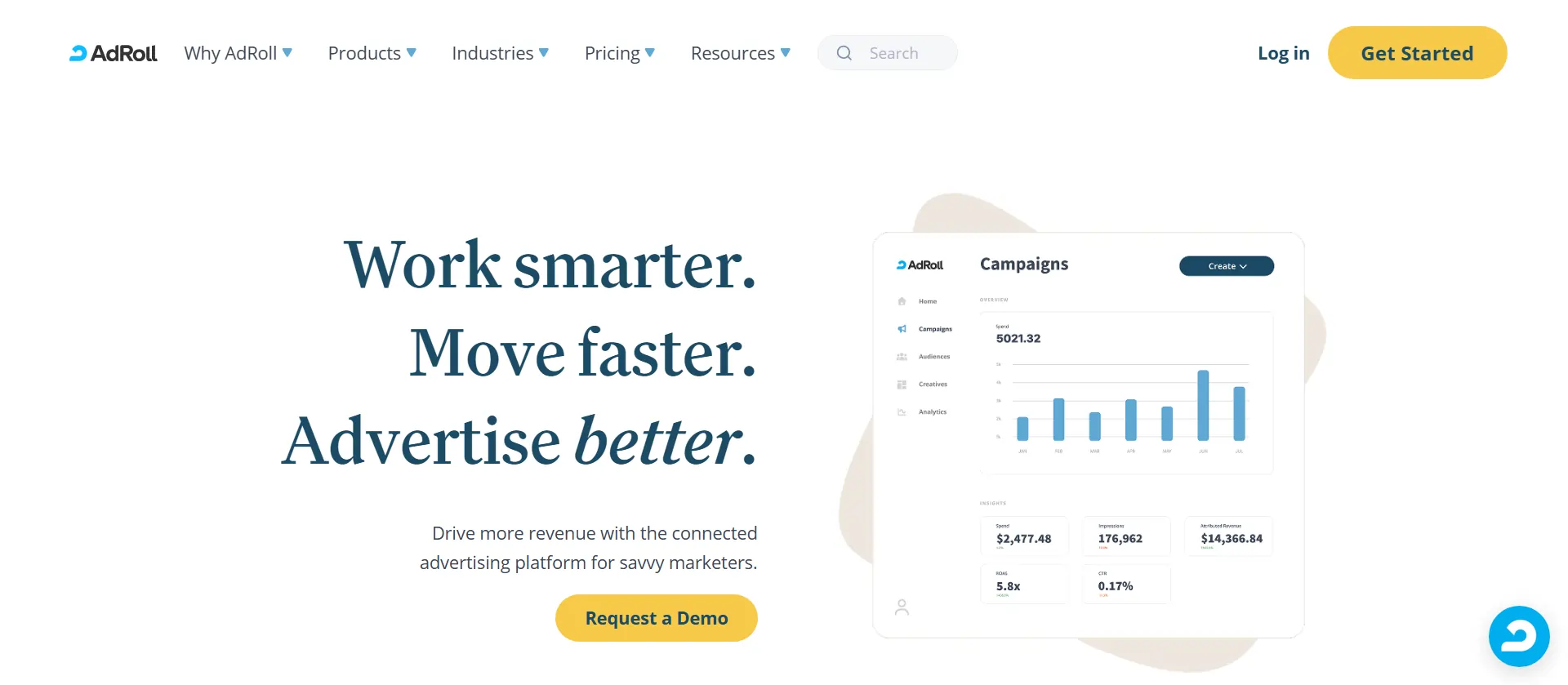
AdRoll combines retargeting excellence with managed services, making sophisticated cross-channel campaigns accessible for small and midsize businesses of all sizes. The platform's machine learning analyses real-time commerce data and historical data to optimise traffic and sales whilst providing hands-on strategic support through their connected advertising platform.
Unlike pure self-serve platforms, AdRoll includes managed services that develop comprehensive strategies, execute ad campaigns, and continuously optimise performance metrics. I've leveraged AdRoll's expertise to scale smaller brands that lack in-house media buying teams through multi-channel advertising.
Key Features and Opportunities:
⭐ Why Choose AdRoll?
AdRoll distinguishes itself among ad networks for e-commerce and retail websites by combining AI-powered retargeting with managed services, delivering enterprise-level campaign sophistication with hands-on support for scalable growth through omnichannel retail media strategies.
10. Walmart Connect

Walmart Connect has exploded to $4.4 billion in advertising revenue with 31% year-over-year growth as a retail media platform, using Walmart's massive offline and online retail footprint. Nearly half (46%) of marketers now use Walmart Connect, recognising its ability to reach shoppers both in 4,700+ stores and online through omnichannel retail media.
What makes Walmart Connect unique is its combination of on-site Sponsored Products, off-site display advertising, and PromoteIQ In-Store placements that create omnichannel touchpoints throughout the customer shopping journey. The platform's first-party data from 240 million weekly shoppers and loyalty membership data enables precision targeting through commerce intelligence unavailable elsewhere.
Key Features and Opportunities:
⭐ Why Choose Walmart Connect?
Walmart Connect revolutionises ad networks for e-commerce and retail websites by bridging online and offline shopping experiences, connecting brand partners with America's largest retailer's massive merchant base through omnichannel advertising and retail media advertising strategies.
📺 How to Scale Campaigns on Multiple Ad Networks for E-commerce?
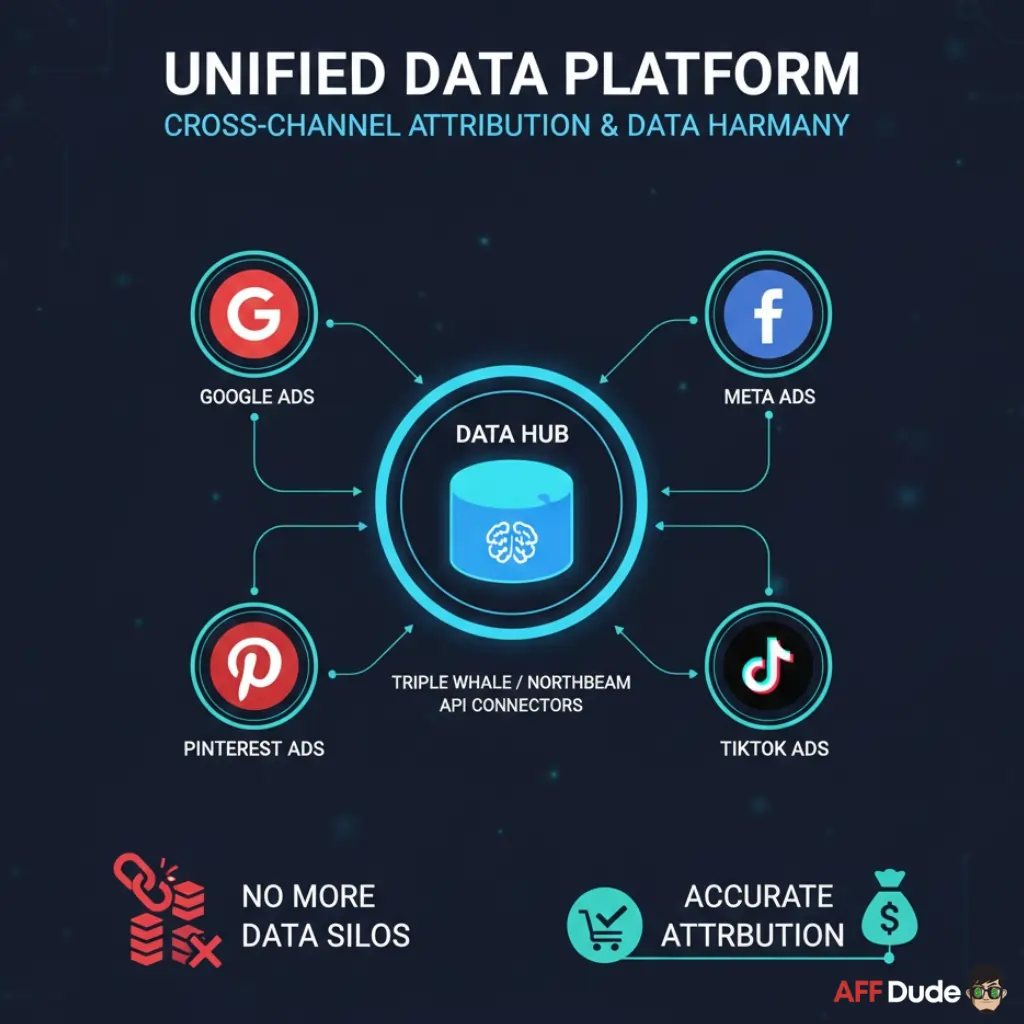
Scaling isn't just about spending more retail media spend; it's about diversifying your “traffic portfolio” through multi-channel advertising to lower your blended Customer Acquisition Cost (CAC). The most successful brands use a “Hub and Spoke” model, with Meta as the core profit drivers and smaller retail media networks like TikTok or Pinterest as experimental growth channels.
E-commerce Ad Network Questions Store Owners Actually Ask
What ROI should I expect from ad networks for e-commerce and retail websites?
Average ROI ranges from 200% (Google Ads) to 3-5x ROAS for retargeting platforms through retail media advertising, varying by industry, product margins, and campaign optimisation using performance metrics.
Which ad network delivers the lowest cost per acquisition?
Microsoft Retail Advertising Network typically offers 33% lower CPCs than Google whilst TikTok provides strong ROAS for viral-style products targeting younger demographics through contextual ads.
Which ad network works best for new product launches?
TikTok excels for viral discovery through video ads whilst Google Shopping captures existing search demand; combine both for comprehensive launch coverage across brand awareness and intent through multi-channel advertising.
Do I need different creative for each platform?
Absolutely—vertical video ads for TikTok/Snapchat, static display ads for Pinterest, shopping feeds for Google/Amazon Ads, and dynamic catalogues for Meta/retargeting platforms through various ad formats.
How important is mobile optimisation for these platforms?
Critical—over 70% of Google Shopping clicks and 80%+ of social commerce occurs on mobile devices; unoptimised mobile experiences kill conversion rates across all retail media platforms.
Can small and midsize businesses compete on these platforms?
Yes—platforms like Pinterest, Microsoft Advertising, and TikTok offer lower competition and CPCs through targeted ad capabilities, whilst Amazon levels the playing field through algorithmic product ranking using commerce signals.
The Bottom Line
Success in e-commerce advertising through retail media networks isn't about using every platform—it's about picking the right ad networks for your products and budget. The ten networks covered above offer proven paths to profitability, from high-intent search traffic through targeted advertising to visual discovery and retargeting using first-party data.
Start by testing two or three advertising networks that match your target customer through demographic targeting, then scale what works through strategic retail media spend. Ready to grow your sales through commerce media? Launch your first ad campaign this week and track every conversion using analytics and reporting.
The stores winning right now aren't the ones with the biggest digital media spend—they're the ones testing smarter through hyper-targeted ad strategies and leveraging retail media programs effectively.
Recommended Articles

Affiliate Disclosure: This post may contain some affiliate links, which means we may receive a commission if you purchase something that we recommend at no additional cost for you (none whatsoever!)