Referral Marketing Statistics 2026: 70+ Surprising ROI Gains
ByMartin Last Updated:
Referral marketing is the oldest and most trusted form of promotion. In 2026, it still outperforms paid ads, cold outreach, and social media campaigns by nearly every metric. Referred customers convert 3–5x higher than any other channel. They spend 200% more. And they stick around 37% longer.
For marketers trying to lower customer acquisition costs while increasing lifetime value, referral programmes are not optional. They are essential. A well-built referral marketing programme delivers 4x higher ROI than digital advertising and reduces cost per lead by up to 40%. Numbers do not lie.
If you are building a customer referral strategy for 2026, every stat in here will help you make the business case, optimise your programme, and scale word-of-mouth into a predictable growth engine
💰Referral Marketing Industry Overview
Referral marketing has grown from informal recommendations into a structured, technology-driven acquisition channel. Market data confirms that brands investing in formal programmes see measurable returns.
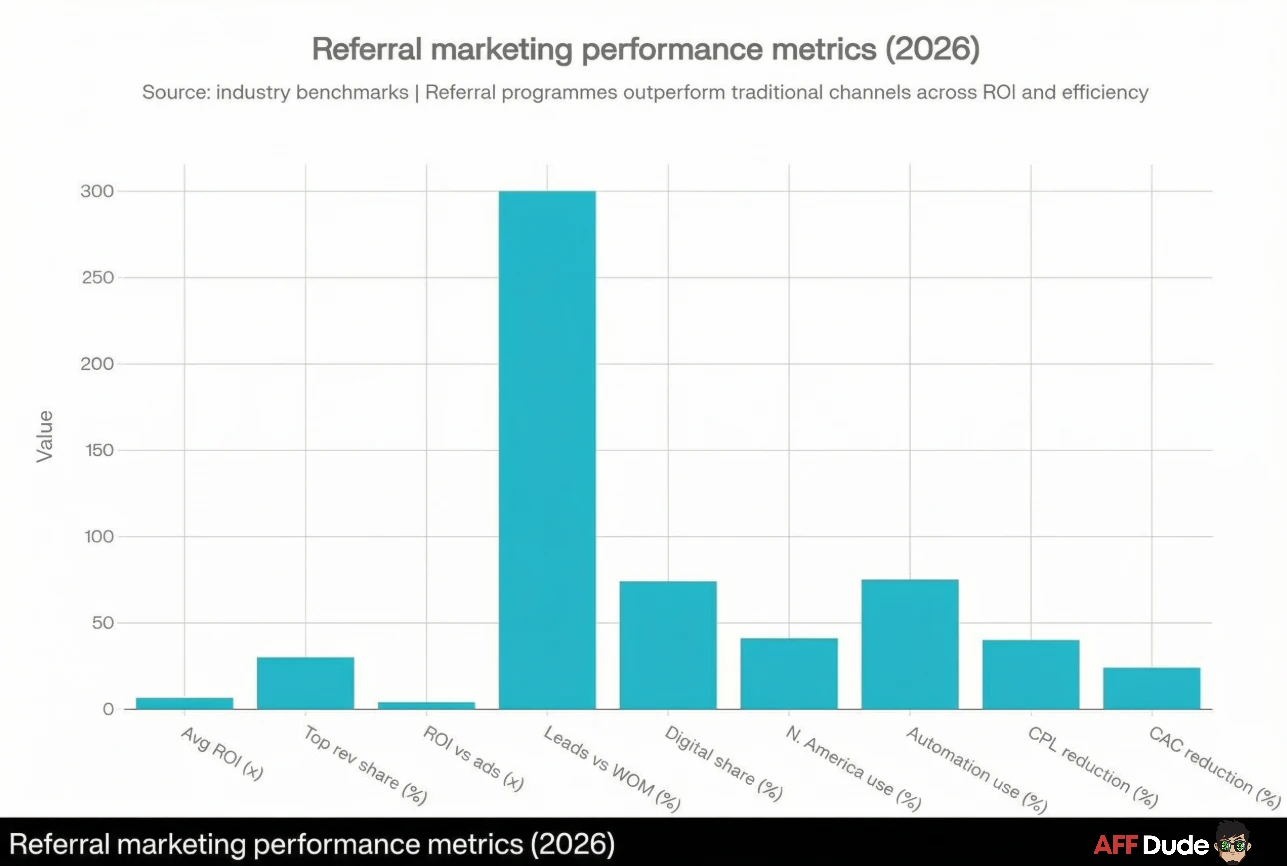
Average referral programme ROI in 2026 is 5–8x, with top-performing brands driving up to 30% of total revenue from referrals.
Digital referral programmes generate 300% more leads versus traditional word-of-mouth.
74% of referrals now occur through digital channels.
Over 41% of referral programme usage is concentrated in North America.
75% of companies use automation in referral programmes.
Brands with referral programmes reduce cost per lead by up to 40%.
Referral programmes lower customer acquisition costs by 24% on average.
For any marketer comparing acquisition channels, few options match the efficiency of a structured customer referral marketing programme. Cost is lower, quality is higher, and retention is stronger.
🤝Consumer Trust and Word-of-Mouth Statistics
Trust drives referrals. And consumers trust people they know far more than any advertisement or influencer.
92% of consumers trust recommendations from people they know more than any other advertising format.
88% of consumers trust personal recommendations above all other forms of marketing.
Word-of-mouth emerged as the top brand discovery source in the US at 38.3%, ahead of TV ads (38%) and search engines (34%).
90% of people trust suggestions from friends and family, while only 33% trust online advertisements.
Word-of-mouth recommendations influence 74% of consumer buying decisions.
91% of B2B buyers are influenced by word-of-mouth when making purchasing decisions.
WOMM influences 99% of all B2B purchases at some stage.
Trust by Recommendation Source
Source
Consumer Trust Level
Friends and family
92%
Expert reviewers
75%
Anonymous online reviews
70%
AI-based recommendation tools
~50%
Online advertisements
33%
Human trust still massively outperforms algorithm-driven recommendations. For marketers, that means building a referral programme around real customer advocacy beats chasing more ad spend.
📈 Referral Marketing Conversion Rate Statistics
Referral leads convert faster and at higher rates than virtually every other marketing channel. Data from 2026 confirms a consistent pattern.
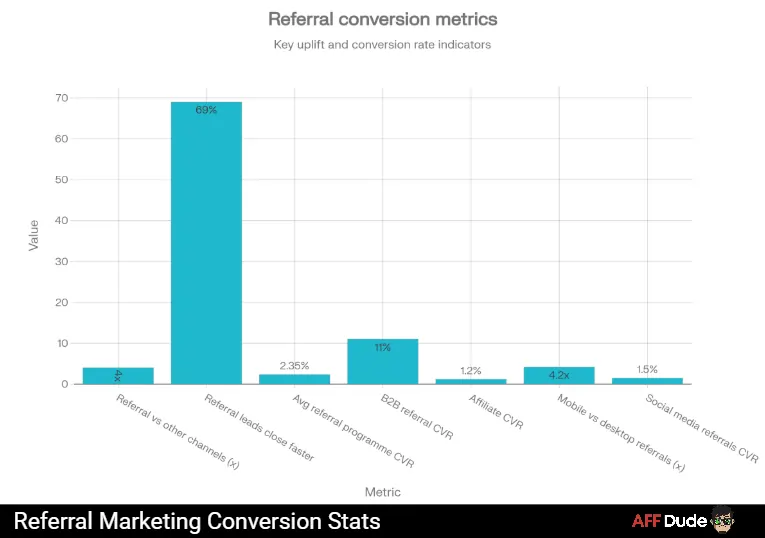
Referral marketing generates 3–5x higher conversion rates than any other channel.
Referral leads close 69% faster than non-referral leads.
Average referral programme conversion rate is 2.35%.
B2B referral conversion rate averages 11%, compared to just 1.2% for affiliate marketing.
Over 72% of marketers report referral systems effectively increase conversion rates.
Peer-driven referrals boost conversion rates by approximately 30%.
Mobile referral programmes convert 4.2x better than desktop-based programmes.
Social media referrals have a lower 1.5% conversion rate, while direct referrals perform significantly higher.
Conversion Rate by Channel
Channel
Average Conversion Rate
Direct referrals (friends/family)
11% (B2B)
Mobile referral links
4.2x higher than desktop
Email referral campaigns
3–5%
Social media referral links
1.5%
Affiliate marketing
1.2%
Mobile dominates. For brands running referral campaigns on mobile, optimising share links and landing pages for smartphone users is critical for maximising conversions.
💎Referred Customer Lifetime Value Statistics
Referred customers are not just easier to acquire. They are more valuable over time. Every metric from spending to retention to loyalty is higher.
Referred customers have a 25% higher lifetime value than customers acquired through other channels.
Customer acquisitions through referrals spend 200% more than average customers.
Referred customers are 13.2% more likely to spend more per transaction.
Referred customers demonstrate 18% more loyalty than non-referred customers.
Referred customers bring a 25% higher profit margin.
Referred customers have a 37% higher retention rate.
58% of marketers say personalised referral solutions drive higher customer lifetime value.
Referred customers are 4x more likely to refer additional customers to your brand.
Referred customers are 18% more likely to explore new products from the same brand.
That 4x multiplier is crucial. Each referred customer becomes a potential referrer, creating a compounding growth loop that no paid channel can replicate. Marketers should track referred customer lifetime value as a primary KPI.
🗣️ Word-of-Mouth Marketing Statistics 2026
Word-of-mouth marketing is the engine behind every referral. It drives trillions in global spending and remains the most cost-effective acquisition method.
Word-of-mouth drives $6 trillion in annual global consumer spending and accounts for 13% of all consumer sales.
70% of marketers plan to increase online WOMM spending.
Millennials are 115% more influenced by word-of-mouth than by advertising.
83% of Americans have made a word-of-mouth recommendation.
55% of Americans make recommendations at least monthly.
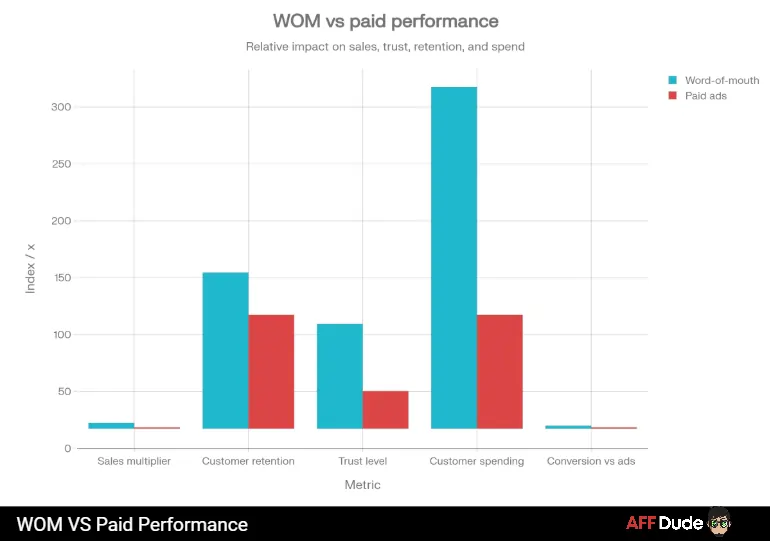
WOMM vs Paid Advertising
Metric
Word-of-Mouth
Paid Ads
Sales multiplier
5x
1x (baseline)
Customer retention
37% higher
Standard
Trust level
92%
33%
Customer spending
200% more
Average
Conversion vs. ads
2–3x more
Baseline
The data is overwhelming. Word-of-mouth referral marketing outperforms paid advertising in trust, conversion, retention, and spending. Brands that systematically encourage WOM through structured programmes gain a massive competitive advantage.
🏢 B2B Referral Marketing Statistics
Referrals are especially powerful in B2B, where purchasing decisions involve higher stakes, longer sales cycles, and more decision-makers.
65% of new B2B business opportunities arise from referrals.
78% of B2B marketers agree referrals are the highest-quality lead source.
82% of B2B sales leaders confirm referrals provide strongest leads.
B2B firms with established referral programmes experience 86% more revenue growth than those without.
80% of B2B companies are expected to use referral marketing as a top strategy by 2027.
Customers referred to B2B companies are 50% more likely to make repeat purchases.
20–50% of B2B decision-makers say word-of-mouth referrals are a major factor in purchasing decisions.
54% of B2B referrals are more cost-effective than other lead generation methods.
For 82% of small businesses, referrals are primary source of new customers and revenue.
For any B2B referral marketing programme, LinkedIn is the dominant channel, driving 80% of all B2B referral traffic.
🏭 Referral Marketing by Industry
Referral effectiveness varies by sector. Professional services, financial services, and real estate see the highest impact.
Industry
Key Referral Stat
Professional Services
85% of new business from referrals
Real Estate
75% of agent business from referrals and WOM
Healthcare
92% trust referrals from people they know
Financial Services
Referred customers are 4x more likely to refer others
Beauty & Cosmetics
82% buy based on friend/family recommendations
SaaS
Referral programmes reduce CAC by up to 25%
E-commerce
Referred customers spend 200% more
Video testimonials in referral programmes increase conversion by 88%.
66% of brands integrate social proof with referral marketing campaigns to boost buying decisions.
70% of businesses using gamified referral programmes report higher engagement.
Industries built on personal trust (real estate, healthcare, financial services) benefit most. But even SaaS and e-commerce brands see major gains when implementing structured referral reward programmes.
🎁 Referral Reward and Incentive Statistics
Incentives matter. How you structure rewards directly impacts participation and share rates.
Double-sided rewards (both referrer and friend get rewarded) are the most effective format for increasing participation.
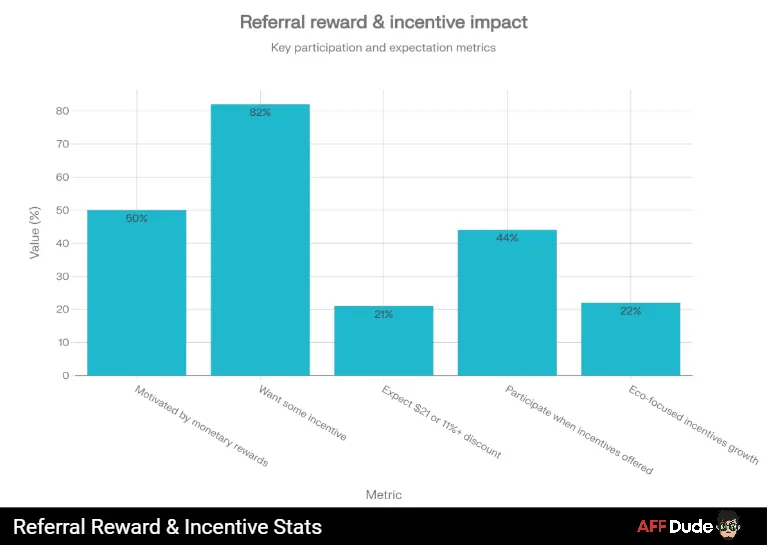
50% of consumers say monetary rewards motivate them to make referrals.
82% of Americans want some form of incentive for sharing a product.
Consumers expect a reward of at least $21 or an 11% discount for making a referral.
44% of consumers actively participate in referral programmes when incentives are offered.
Eco-conscious and sustainability-focused referral incentives grew by 22% in adoption.
Higher-value rewards correlate directly with increased participation and conversion.
Best Referral Incentive Types
Cash or store credit (highest participation)
Percentage-based discounts (strong for e-commerce)
Free product or upgrade (works well for SaaS)
Tiered rewards for multiple referrals (drives repeat sharing)
Charity donations (growing in popularity among younger demographics)
Double-sided rewards remain the gold standard. Giving both parties a benefit creates a win-win referral experience that encourages sharing without feeling transactional.
👔 Employee Referral Programme Statistics
Referral marketing does not just work for customers. It is equally powerful for recruitment and talent acquisition.
88% of employers say employee referrals are their best source for above-average candidates.
Employee referral programmes reduce hiring costs by up to 50% compared to traditional methods.
Referred employees stay with companies 70% longer than non-referred employees.
45% of referred employees stay for more than 4 years, versus 25% from job boards.
Companies with employee referral programmes see 46% higher retention rates.
Employee referrals save companies an average of $7,500 per hire.
For HR teams and employer brand marketers, building a formal employee referral incentive programme is one of the fastest ways to cut hiring costs and improve talent quality.
📱 Referral Traffic and Channel Statistics
Where referrals happen matters just as much as whether they happen. Mobile and social channels dominate.
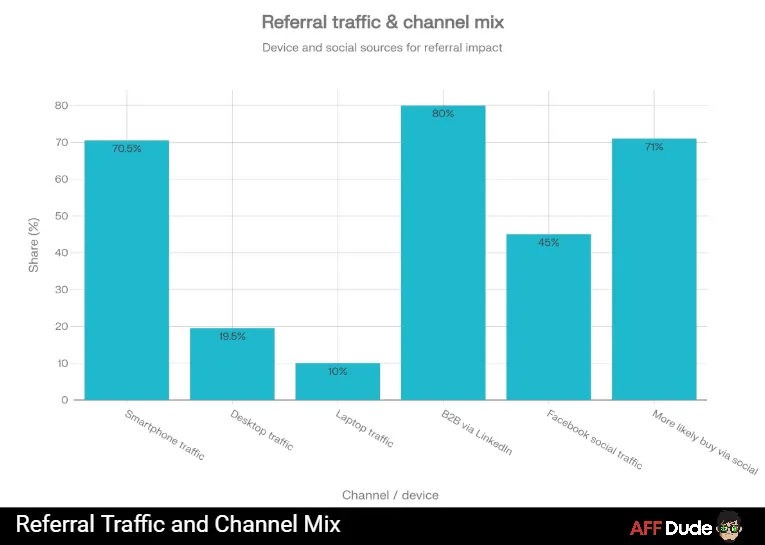
US smartphones account for 70.5% of referral traffic to e-commerce websites.
Desktops generate 19.5% and laptops 10% of referral traffic.
80% of B2B referrals come through LinkedIn.
Facebook accounts for 45% of social media referral traffic.
71% of people are more likely to purchase when referred via social media.
Mobile referral programmes convert 4.2x better than desktop.
For marketers building referral programme landing pages, mobile-first design is non-negotiable. Over 70% of referral clicks happen on smartphones, and clunky mobile experiences kill conversion rates.
⚠️Referral Marketing Challenges
Despite outstanding performance, referral programmes face real obstacles that limit scale.
83% of happy customers are willing to refer products, but only 29% actually follow through.
That gap between intent and action is the single biggest referral marketing challenge for brands.
About 12% of referral traffic comes from bot-generated sources, creating measurement noise.
47% of non-owners in crypto said they would never buy, showing similar resistance patterns exist in referral programme adoption.
Closing the 83%-to-29% gap is where automation, timing, and smart incentives make a difference. Sending referral prompts at the right moment (post-purchase, post-positive review, milestone events) dramatically improves follow-through rates
🔮Referral Marketing Trends Shaping 2026 and Beyond
Several shifts are redefining how brands approach referral programme strategy going forward:
AI-powered referral matching is enabling brands to identify and target their most likely advocates with personalised prompts.
Gamified referral programmes boost engagement, with 70% of businesses using gamification reporting higher participation.
Video testimonials in referral flows increase conversions by 88%, making user-generated video a critical format.
Sustainability-focused incentives are growing 22% year-on-year, driven by younger, eco-conscious consumers.
80% of B2B companies are expected to adopt referral marketing as a top strategy by 2027.
Referred customers are 25% more likely to give feedback, providing brands with valuable product insights alongside new revenue.
Referral programmes drive 43% more quality leads than non-referral channels.
Referral marketing in 2026 is not a side tactic. It is a primary growth channel. Brands investing in structured programmes with smart incentives, mobile-first design, and automated follow-ups are building acquisition engines that compound over time.
Every happy customer becomes a potential salesperson, and no ad budget in the world can replicate genuine human trust 🚀.
Affiliate Disclosure: This post may contain some affiliate links, which means we may receive a commission if you purchase something that we recommend at no additional cost for you (none whatsoever!)
Martin
Affiliate Marketing Expert
Martin is a seasoned affiliate marketer with over 8 years of experience. He specializes in ad spy tools, e-commerce platforms, and affiliate networks. At AffDude, Martin shares actionable insights and unbiased reviews to help marketers maximize ROI and stay ahead of the competition.